Kuari Pass Trek
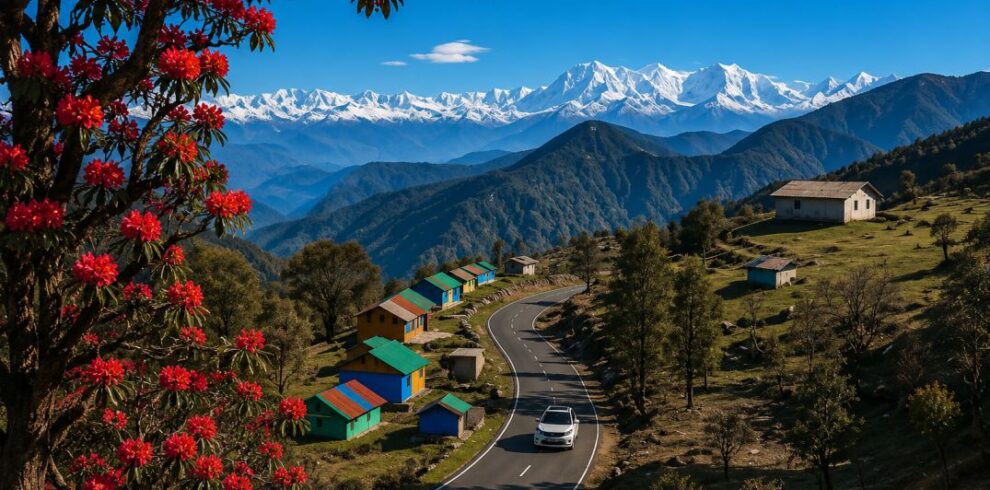
Experience one of the most scenic high-altitude treks in Uttarakhand as you journey through dense Himalayan forests, open alpine meadows, mountain ridges and spectacular views of the Garhwal Himalayas. The Kuari Pass Trek is known for its beautiful combination of forest trails, high-altitude grasslands and panoramic mountain scenery.
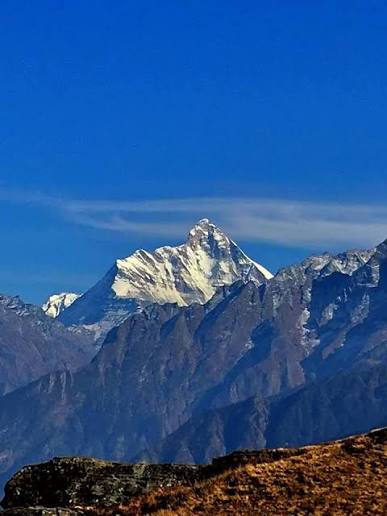
Located in the Chamoli region of Uttarakhand, Kuari Pass is a historic Himalayan trail traditionally associated with the Lord Curzon Trail. The route offers impressive views of peaks including Nanda Devi, Dronagiri, Chaukhamba, Kamet and the Hathi-Ghoda group on clear days.
The trek is generally considered moderate and can be undertaken by fit beginners with appropriate preparation, trekking experience and guidance.
Why Choose the Kuari Pass Trek?
Kuari Pass is a good choice for trekkers who want a Himalayan experience without committing to an extremely technical expedition.
The trail combines moderate trekking challenges with impressive mountain scenery. You get forest walks, meadow crossings, gradual altitude gain, ridge sections and a high-altitude pass experience within one journey.
For first-time trekkers, the route can also provide a useful introduction to multi-day Himalayan trekking when undertaken with suitable preparation and an experienced trekking team.
Kuari Pass Trek Overview
| Trek Information | Details |
|---|---|
| Trek Name | Kuari Pass Trek |
| Region | Garhwal Himalayas, Uttarakhand |
| District | Chamoli |
| Maximum Altitude | Approximately 12,516 ft / 3,815 m |
| Difficulty | Moderate |
| Trek Duration | Usually 5–6 trekking days depending on route |
| Starting Area | Karchi / Dhak or Auli, depending on itinerary |
| Nearest Major Town | Joshimath |
| Nearest Railway Access | Rishikesh |
| Nearest Airport | Jolly Grant Airport, Dehradun |
| Best Seasons | Spring, Summer and Autumn; winter for snow conditions |
| Terrain | Forests, meadows, ridges and high-altitude trails |
Altitude and difficulty are consistent with the current Uttarakhand Tourism listing, while exact distance and itinerary can vary according to the route selected by the trekking operator.
Kuari Pass Trek Difficulty
The Kuari Pass Trek is generally graded as moderate.
The trek involves regular ascents and descents, changing terrain and a high-altitude pass crossing. Some sections can become more demanding because of steep gradients, snow, rain, strong winds or slippery surfaces.
The final difficulty also depends on weather, fitness, altitude response and the condition of the trail.
Is Kuari Pass Suitable for Beginners?
Fit beginners can consider the Kuari Pass Trek if they prepare properly before the journey.
You should be comfortable walking for several hours on uneven mountain terrain and should have enough cardiovascular endurance to handle consecutive trekking days.
Beginners should not underestimate the altitude or the longer summit-day sections.
Kuari Pass Trek Altitude
The highest point of the Kuari Pass route is approximately 12,516 ft / 3,815 m.
The gradual increase in elevation makes pacing and hydration important. Trekkers should avoid rushing uphill and should communicate immediately with the trek leader if they experience unusual symptoms at altitude.
Because weather and trail conditions can change quickly in the mountains, the final route may occasionally be modified for safety.
Kuari Pass Trek Distance
The total trekking distance depends on the route and itinerary selected.
The current Uttarakhand Tourism listing records a 20 km trek, while current commercial itineraries use different route configurations and therefore report different total walking distances. Indiahikes’ current itinerary, for example, lists approximately 21–22 km of trekking across its four trekking days.
For your website, mention the exact distance according to your own operational route rather than copying another operator’s number.
Kuari Pass Trek Route
A commonly used route in the Kuari Pass region connects the Joshimath/Auli side with trekking sections around Dhak, Gulling, Khullara, Kuari Pass, Tali and Auli.
The exact route can vary between operators.
A representative route is:
Rishikesh → Joshimath → Dhak/Karchi → Gulling/Akhrotghetta → Khullara → Kuari Pass → Tali → Auli → Joshimath → Rishikesh
Always check the confirmed itinerary before booking because campsites and trail sections can be changed due to weather, snow, local conditions or administrative restrictions.
Best Time for Kuari Pass Trek
Kuari Pass can offer a very different experience depending on the season.
Kuari Pass in Spring
Spring is a beautiful period for trekking in Uttarakhand.
The forests begin to become colourful, rhododendrons may bloom in suitable areas, and snow can still remain on higher sections depending on the season.
The combination of forest, snow and emerging greenery creates a distinctive Himalayan landscape.
Kuari Pass in Summer
Summer generally brings warmer daytime conditions and clearer walking conditions compared with winter.
The higher meadows become increasingly green and the mountain landscape takes on a fresh appearance.
However, weather can become less predictable as the monsoon approaches, particularly towards late June.
Kuari Pass in Monsoon
July and August are generally affected by the southwest monsoon in Uttarakhand.
Heavy rainfall can create slippery trails, landslides, road disruptions and changing trail conditions.
For this reason, trek operators may restrict or modify departures during periods of adverse weather.
Kuari Pass in Autumn
September through November is popular for Himalayan trekking because the post-monsoon atmosphere can provide clearer mountain views.
The meadows gradually change colour as the season progresses, while temperatures become colder, particularly after sunset.
Kuari Pass in Winter
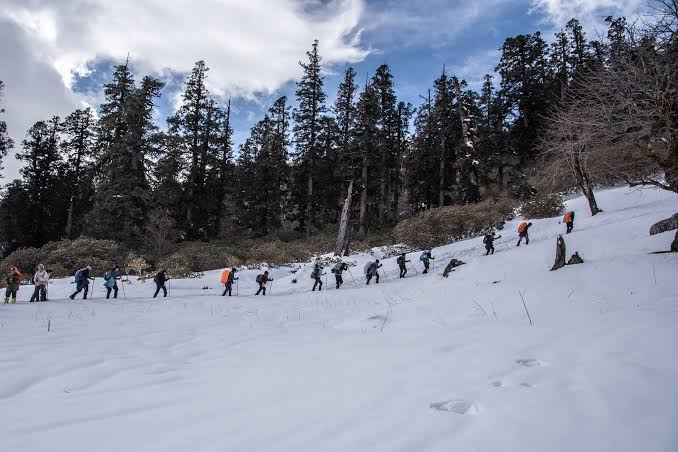
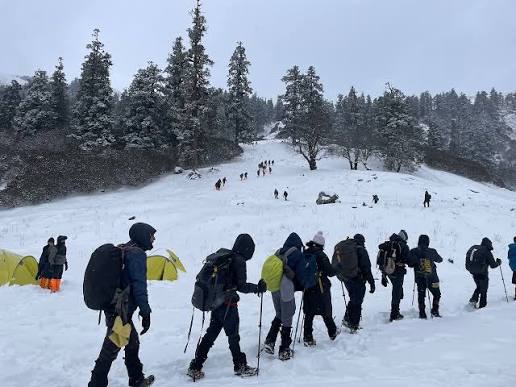
Winter transforms the Kuari Pass landscape into a snow-covered Himalayan environment.
Snowfall, freezing temperatures and icy sections can make the route considerably more demanding.
Trekkers attempting the winter route should carry appropriate cold-weather equipment and travel with experienced support.
Kuari Pass Trek Weather
Weather in the high Himalayas can change quickly.
During the day, conditions may be comfortable under clear skies, while temperatures can fall sharply after sunset.
Rain, snowfall, strong winds, fog and sudden temperature changes are possible depending on the season.
Trekkers should therefore carry proper layers, rain protection, warm clothing and suitable trekking footwear.
Always check the latest weather forecast before departure.
Kuari Pass Trek Temperature
Temperature varies significantly with altitude and season.
A general seasonal pattern is:
Spring: Cold mornings and evenings with moderate daytime temperatures.
Summer: Relatively comfortable daytime conditions with cooler nights.
Autumn: Clearer and colder conditions, especially at night.
Winter: Sub-zero temperatures are possible at higher camps and snow-covered sections.
Exact temperatures vary with altitude, weather and date, so seasonal averages should not be treated as guaranteed conditions.
Kuari Pass Trek Cost
The Kuari Pass Trek cost depends on the duration, accommodation, transportation, group size and services included in your package.
A standard package may include:
- Accommodation
- Camping equipment
- Meals during the trek
- Trek leader and support staff
- Local transportation according to the itinerary
- Permits where applicable
- Camping equipment
- First-aid support
Personal expenses, transportation to the reporting point, personal equipment, insurance and optional porter/offloading services may be charged separately depending on the package.
Package Price: ₹ 9,999/- per person
Kuari Pass Trek Accommodation
Accommodation depends on the selected package.
During the trekking section, trekkers generally stay in camping accommodation at designated campsites.
Depending on the itinerary, the group may use:
Twin-sharing tents
Sleeping bags
Foam mattresses
Ground sheets
Dining arrangements
Common toilet facilities
Accommodation conditions in the mountains are basic and designed primarily for safety and functionality rather than luxury.
Kuari Pass Trek Network and Connectivity
Mobile connectivity becomes limited as you move deeper into the trekking area.
Network availability can vary according to location, weather and mobile operator.
Trekkers should not depend on mobile connectivity during the trek.
Keep important emergency contacts saved offline and inform family members that network connectivity may be intermittent.
Kuari Pass Trek Permits
Trekking in the Himalayan forest and protected areas may require permissions, permits or local registration depending on the route and current regulations.
The required permits and formalities should be arranged according to the applicable Uttarakhand authorities and local forest regulations.
Your trekking operator should confirm the current requirements before the departure date.
Kuari Pass Trek Experience
The Kuari Pass Trek is more than reaching a mountain pass.
It is a journey through changing Himalayan landscapes — from mountain villages and dense forests to open meadows, high ridges and panoramic viewpoints.
Every section of the trail offers something different. The forests provide shade and tranquillity, the meadows create wide open landscapes, and the higher ridges reveal the dramatic scale of the Garhwal Himalayas.
For trekkers looking for a balanced Himalayan adventure combining scenery, moderate physical challenge and a genuine high-altitude experience, Kuari Pass offers a memorable journey through the mountains of Uttarakhand.
Kuari Pass Trek Highlights
- One of the biggest attractions of the Kuari Pass Trek is its wide mountain panorama. As the trail climbs above the forest line, the landscape opens towards some of the most prominent peaks of the Garhwal Himalayas. On clear days, trekkers may see magnificent peaks such as Nanda Devi, Dronagiri, Chaukhamba, Kamet, Neelkanth and the Hathi-Ghoda peaks.
- The lower sections of the trek pass through beautiful Himalayan forests containing oak, rhododendron and other mountain vegetation. The character of the forest changes with altitude and season, making the trail visually different from one section to another. In spring, rhododendron flowers add colour to the forest, while winter can transform the trail into a snowy landscape.
- Gorson Bugyal is one of the most attractive meadow sections associated with the Kuari Pass region. The broad grasslands provide a dramatic contrast to the surrounding forests and mountains. During clear weather, the open meadow gives trekkers excellent opportunities to appreciate the surrounding Himalayan landscape.
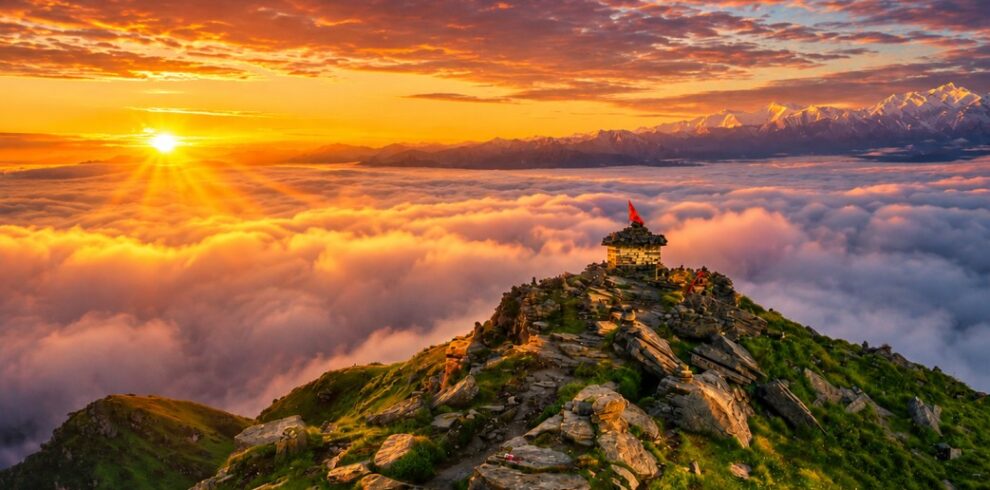
- The higher sections of the Kuari Pass route include exposed ridges and open terrain. These sections provide a completely different trekking experience compared with the forest trails below. The combination of ridgeline walking, mountain views and changing terrain makes the summit section one of the most memorable parts of the trek.
- Reaching Kuari Pass is the central objective of the trek. The approach gradually changes from forested terrain to open high-altitude landscapes. From the upper sections, the surrounding Himalayan ranges become increasingly prominent, creating a rewarding experience after several days of trekking.
- Depending on the route and itinerary, camps may be established around locations such as Karchi, Akhrotghetta, Khullara and Tali. Each campsite offers a different mountain environment, from forest clearings to open meadows and high-altitude landscapes.