When is the Best Time for Kedarkantha Trek?
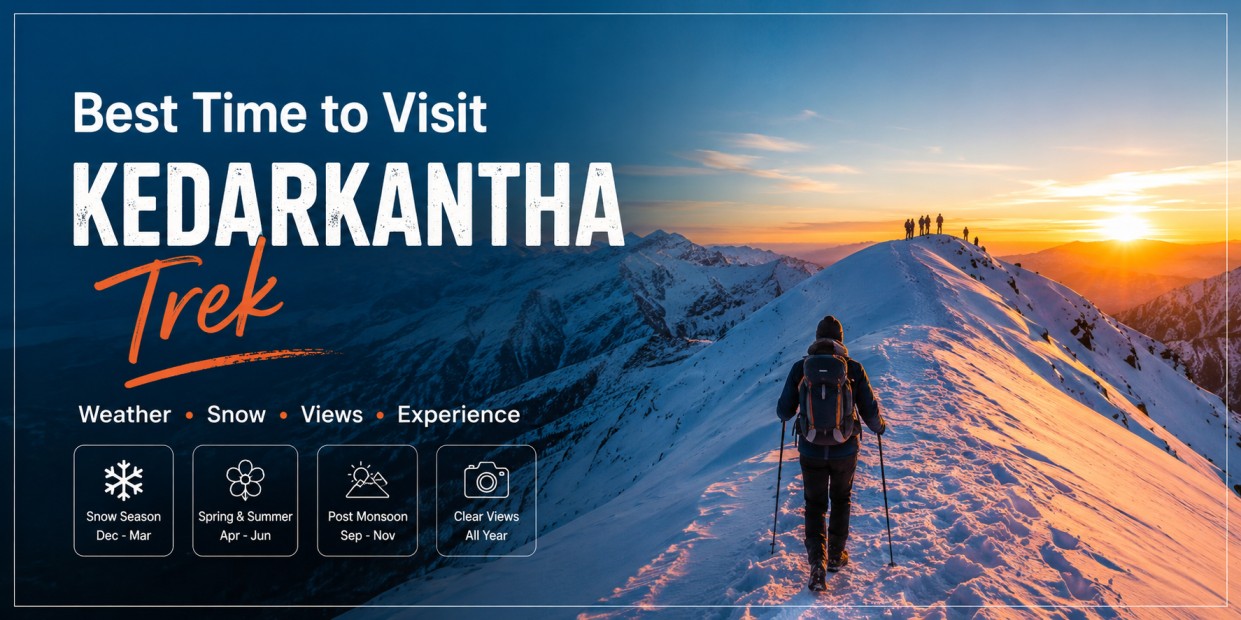
The best time to visit Kedarkantha Trek is from December to March if you want the classic snow trek experience with frozen landscapes and deep snow. However, Kedarkantha is one of the few Himalayan treks that offers a completely different yet equally magical experience in every season except monsoon.
- For Snow & Winter Adventure: December to March (Peak: January)
- For Snow + Greenery Mix: March to April
- For Lush Meadows & Families: May to June
- For Clear Mountain Views & Photography: September to November
- Avoid: July & August (heavy rains, landslides, trail closure)
🔗 Ready to book? Check out our Kedarkantha Trek Package or the specialized Kedarkantha Winter Trek for the ultimate snow experience.
Kedarkantha Trek Month-wise Weather & Temperature Guide
| Month | Day Temp | Night Temp | Snow Condition | Best For |
|---|---|---|---|---|
| January | -2°C to 5°C | -8°C to -15°C | Deep snow, frozen lake | Hardcore snow lovers, photographers |
| February | 0°C to 7°C | -5°C to -10°C | Thick snow cover | Beginners wanting winter experience |
| March | 5°C to 12°C | -2°C to 5°C | Snow at higher camps | Best of both worlds (snow + spring) |
| April | 8°C to 15°C | 0°C to 5°C | Melting snow, rhododendrons | Families, nature lovers |
| May | 10°C to 18°C | 5°C to 10°C | No snow, lush green | Beginners, bird watchers |
| June | 12°C to 20°C | 8°C to 12°C | Clear trails, wildflowers | Summer trekking, families |
| July | 12°C to 18°C | 10°C to 15°C | Heavy rainfall | Not Recommended |
| August | 12°C to 18°C | 10°C to 15°C | Landslide risk | Not Recommended |
| September | 10°C to 16°C | 5°C to 10°C | Post-monsoon greenery | Clear views, fewer crowds |
| October | 8°C to 14°C | 0°C to 5°C | Golden forests | Photographers, autumn colors |
| November | 5°C to 10°C | -2°C to 2°C | First snowfall begins | Pre-winter solitude seekers |
| December | 0°C to 8°C | -5°C to -10°C | Fresh snowfall starts | Classic winter trek experience |
Kedarkantha Trek Month-wise Weather & Temperature Guide
Winter is when Kedarkantha earns its title as the “Queen of Winter Treks”. Standing at 12,500 feet in the Govind Wildlife Sanctuary of Uttarakhand, the entire trail transforms into a white wonderland.
What to Expect in Winter:
- Deep Snow Cover: The trails, forests, and meadows are blanketed in fresh powdery snow. In January, you may encounter knee-deep snow on the summit push.
- Frozen Juda Ka Talab: The iconic alpine lake freezes completely, creating a surreal mirror-like ice surface surrounded by snow-laden pine trees.
- Temperature Drops: Nights can plunge to -15°C at higher campsites. Daytime temperatures hover between 0°C to 8°C.
- 360° Summit Views: From the Kedarkantha summit, witness uninterrupted views of Swargarohini, Bandarpunch, Black Peak, and Draupadi ka Danda.
Who Should Go in Winter?
- Adventure seekers looking for a real snow trek in the Himalayas
- First-time trekkers (the trail is beginner-friendly despite the snow)
- Photography enthusiasts chasing golden sunrises over snowy peaks
🔗 Book the ultimate snow experience: Kedarkantha Winter Trek
Kedarkantha Trek in Spring (March – April) 🌸
Spring is one of the most underrated seasons for Kedarkantha. Here’s the secret most trekkers don’t know: you still get plenty of snow in March, but with the bonus of blooming landscapes.
What Makes Spring Special:
- Snow + Greenery Combo: Higher campsites still hold snow from winter, while the forests burst into fresh green with rhododendron (Buransh) flowers painting the trail in red and pink.
- Pleasant Temperatures: Days are comfortable at 10°C to 15°C, while nights are chilly but manageable at 0°C to 5°C.
- Bird Watching: The Govind Wildlife Sanctuary comes alive with Himalayan Monal, golden eagles, and numerous songbirds.
- Fewer Crowds: Unlike the December-January rush, spring offers a more peaceful trail experience.
Who Should Go in Spring?
- Trekkers who want snow without extreme cold
- Nature lovers and photographers
- Those seeking a quieter Himalayan experience
Kedarkantha Trek in Summer (May – June) 🌿
If you think Kedarkantha is only a winter destination, summer will completely change your mind. This is when the trek is at its greenest best.
Summer Highlights:- Lush Meadows: The clearings above the forests turn into vibrant green carpets sprinkled with wildflowers.
- Family-Friendly Weather: Day temperatures range from 15°C to 20°C, making it ideal for families with children and beginner trekkers.
- Clear Trail Visibility: Without snow cover, you can clearly see the ridge lines and the full grandeur of the Garhwal Himalayas.
- Perfect Campsites: The forest clearings at Juda Ka Talab and Pukhrola are magical under starlit summer skies.
- Families and first-time Himalayan trekkers
- Wildlife and bird photography enthusiasts
- Those who prefer comfortable trekking weather over snow
Kedarkantha Trek in Autumn (September – November) 🍂
Autumn is the photographer’s paradise. After the monsoon clears, the Himalayas reveal their sharpest, clearest views.
- Crystal Clear Skies: The post-monsoon atmosphere is squeaky clean. The 360° views from the summit are at their absolute best with zero haze.
- Golden Forests: The oak and maple forests turn shades of yellow, orange, and brown. The trail becomes a crunchy carpet of fallen leaves.
- Moderate Temperatures: Days are pleasant at 10°C to 15°C, with nights dropping to 0°C to 5°C.
- Solitude: Autumn sees far fewer trekkers than winter, giving you the mountains almost entirely to yourself.
- Landscape photographers
- Trekkers seeking solitude and clear weather
- Those who want to avoid the winter crowd
Why You Should Avoid Monsoon (July – August) 🌧️
The Kedarkantha trek is typically closed during monsoon for good reason:
- Heavy rainfall makes trails extremely slippery and dangerous
- High risk of landslides in the Govind Wildlife Sanctuary region
- Leeches and muddy conditions make trekking unpleasant
- Cloud cover blocks the iconic 360° summit views
- Many trekking organizations do not operate batches during these months
Exception: Only highly experienced trekkers with proper gear and local guides should consider monsoon trekking, and even then, it is not recommended.
Kedarkantha Trek Difficulty by Season
Kedarkantha is rated Easy to Moderate, but the difficulty varies by season:
| Season | Difficulty Level | Why? |
|---|---|---|
| Winter | Moderate | Deep snow, sub-zero nights, steep summit push in snow |
| Spring | Easy to Moderate | Some snow remains; slippery patches possible |
| Summer | Easy | Clear trails, warm weather, no technical challenges |
| Autumn | Easy to Moderate | Occasional post-monsoon trail damage; otherwise clear |
The total trekking distance is approximately 20-23 km over 4 days (6 days including travel from Dehradun). The altitude gain from Sankri (6,400 ft) to the summit (12,500 ft) is significant, so proper acclimatization is essential regardless of season.
What to Pack for Each Season
Winter Packing List:
- Thermal inners (2 sets)
- Fleece jacket + insulated down jacket
- Waterproof trekking shoes with ankle support
- Micro-spikes and gaiters (for snow)
- Woolen cap, balaclava, waterproof gloves (2 pairs)
- Sunglasses (UV protection) + sunscreen
- Headlamp with extra batteries
Spring/Autumn Packing List:
- Warm layers (3-4)
- Light fleece + windproof jacket
- Trekking pole for balance
- Rain cover for backpack
- Comfortable trekking shoes
Summer Packing List:
- Light breathable clothing
- One warm jacket for nights
- Sun hat and sunglasses
- Water bottle (2 liters minimum)
- Basic first-aid kit
Kedarkantha Trek Route & Key Highlights
The Kedarkantha trek route starts from the quaint village of Sankri in Uttarakhand:
- Day 1: Drive from Dehradun to Sankri (200 km, 9-10 hours)
- Day 2: Sankri to Juda Ka Talab (4-5 km, 4 hours) – Trek through dense pine and oak forests
- Day 3: Juda Ka Talab to Kedarkantha Base Camp (4 km, 3-4 hours) – Ascend through snowy meadows
- Day 4: Summit Day – Base Camp to Kedarkantha Peak (12,500 ft) and descend to Hargaon (6-7 km, 7-8 hours)
- Day 5: Hargaon to Sankri (4 km, 3 hours) and drive back
Key Highlights:
- Juda Ka Talab: A serene high-altitude lake, frozen in winter
- Pukhrola & Hargaon Campsites: Beautiful clearings in the middle of forests
- Kedarkantha Summit: 360° panoramic views of the Garhwal Himalayan range
- Govind Wildlife Sanctuary: Chance to spot Himalayan black bear, musk deer, and snow leopards
How to Reach Sankri – The Base Camp
- Nearest Airport: Jolly Grant Airport, Dehradun (45 minutes from Delhi by flight)
- Nearest Railway Station: Dehradun Railway Station
- Road: Buses and shared taxis available from Dehradun’s Prince Chowk starting at 5:00 AM
- Private Cab: Direct from Dehradun to Sankri costs approximately ₹6,500 – ₹7,000
💡 Important: The last ATM is at Purola. Carry sufficient cash for Sankri as network connectivity (BSNL/Jio) is limited and ATMs are unreliable.
Frequently Asked Questions (FAQs)
1. Is Kedarkantha only a winter trek?
No. While Kedarkantha is famous as a winter trek, it is equally beautiful in spring, summer, and autumn. Each season offers a completely different landscape and experience.
2. What is the best month for Kedarkantha trek for snow?
January sees the heaviest snowfall. December and February also offer excellent snow conditions. For a balance of snow and manageable cold, March is ideal.
3. How difficult is the Kedarkantha trek?
Kedarkantha is rated Easy to Moderate. The gradual ascent and well-marked trails make it one of the best Himalayan treks for beginners. The summit day is the most challenging part.
4. What is the total distance of Kedarkantha trek?
The trek covers approximately 20-23 km over 4 trekking days (6 days total including travel).
5. Can beginners do Kedarkantha trek in winter?
Yes. Kedarkantha is often called the best winter trek for beginners in India. The trail is well-defined, and no technical climbing skills are required.
6. What is the temperature at Kedarkantha summit?
In winter, summit temperatures can drop to -10°C to -15°C. In summer, it ranges from 5°C to 10°C.
7. Is Kedarkantha trek safe?
Yes, when done with a registered trekking organization. The trail is well-marked, and the gradual altitude gain minimizes the risk of Acute Mountain Sickness (AMS).
8. How does Kedarkantha compare to other winter treks?
Kedarkantha offers a true summit climb experience unlike meadow-based treks. For a comparison with other popular treks, explore our Chopta Tungnath Chandrashila Trek – another excellent winter option in Uttarakhand.
Why Book Your Kedarkantha Trek With Trek Tonic Adventures
At Trek Tonic Adventures, we don’t just organize treks – we craft Himalayan experiences:
✅ Expert Local Guides with deep knowledge of the Kedarkantha trail
✅ Safety-First Approach with certified equipment and emergency protocols
✅ All-Inclusive Packages covering meals, camping gear, permits, and transport from Dehradun
✅ Small Batch Sizes for a personalized trekking experience
✅ Sustainable Trekking practices to preserve the pristine Himalayas
✅ Safety-First Approach with certified equipment and emergency protocols
✅ All-Inclusive Packages covering meals, camping gear, permits, and transport from Dehradun
✅ Small Batch Sizes for a personalized trekking experience
✅ Sustainable Trekking practices to preserve the pristine Himalayas