Trip Info
-
Winter
-
12,500 fit
-
Home stay
Kedarkantha Trek: Route, Cost, Snow & Trekking Tips
Kedarkantha is one of those Himalayan treks that offers the true experience of summit trekking without requiring any technical mountaineering experience. For many first-time trekkers, reaching the summit of Kedarkantha is their first experience of standing on a Himalayan peak, and that feeling is something they remember for a long time.
What makes Kedarkantha special isn’t just the peak itself, but the journey that takes you there. The route passes through serene pine, oak, and maple forests, open mountain meadows, and traditional villages before gradually ascending higher slopes. At various points along the way, the peak appears and then disappears behind the forest, making the final climb even more thrilling. As you approach the summit, the views open up and the path becomes steeper. The final climb can be challenging, especially in winter when the path is covered in snow, but a gradual and steady climb makes the climb even more enjoyable. Reaching the summit after all that hard work is one of the best moments of the entire trek. From the summit, clear weather offers stunning views of the Himalayas, with peaks and mountains like the Swargarohini, Bandarpoonch, Kalanag, and Gangotri ranges visible in the distance. Of course, mountain weather can change rapidly, so the views depend on the conditions on the day of your trek.
But Kedarkantha is more than just climbing the peak. Along the way, you’ll pass through beautiful forests, spend nights at quiet campsites, and experience the tranquil side of the Himalayas. The route around Kotgaon and the surrounding villages also offers a glimpse into traditional mountain life, where local communities have lived in harmony with these forests and mountains for generations.
Winter is perhaps the season most people associate with Kedarkantha. When snow covers the forests, campsites, and open fields, the entire landscape takes on a completely different look. Walking in fresh snow, camping in the cool mountain air, and climbing to the peak on a winter morning can make the trek feel like a true Himalayan adventure. Winter conditions can be challenging, so proper warm clothing, the right trekking shoes, and good preparation are essential.
Many trekkers don’t realise that Kedarkantha is beautiful even outside the winter months. In spring, the forests turn greener, and rhododendrons bloom. In summer, the snow gives way to lush meadows, forest trails, and colourful wildflowers. In autumn, the skies clear, golden views emerge, and the mountain takes on a completely different look. Without snow, the path reveals grassy slopes, rocky outcrops, and open vistas leading to the peak.
At Trek Tonic Adventures, we always believe that Kedarkantha is best experienced as a complete journey, rather than just climbing the peak. Each season brings something new to the route, but the forests, mountain villages, campsites, changing views, and the excitement of reaching the summit remain the same. Whether you’re planning your first Himalayan trek or simply looking for a beautiful mountain vacation, Kedarkantha offers a memorable experience that stays with you long after you return home.
Trek Overview
Kedarkantha Trek Price & Packages
The cost of your Kedarkantha Trek depends on the package you choose and the services you need. Our two package options help you select an experience that suits your travel plans, budget and comfort level.
Kedarkantha Trek – Standard Package
What’s Included
- Accommodation
- Meals
- Trek guide
- Required permits
- Transport from Sankri
A simple, budget-friendly option for travellers who want to focus on the trekking experience.
Kedarkantha Trek – Deluxe Package
What’s Included
- Everything in the Standard Package
- Dehradun transfers
- Additional comfort during the trip
Suitable for travellers who prefer added convenience and a more comfortable overall journey.
| Package | Price per Person | Best Suited For |
|---|---|---|
| Standard Package | ₹5,999/- | Budget-conscious trekkers |
| Deluxe Package | ₹8,999/- | Travellers seeking added convenience |
Important: Package inclusions, transport arrangements and prices may change depending on the departure date, weather and local operating conditions. Please confirm the latest package details with Trek Tonic Adventures before booking.
What’s included in the Kedarkantha Trek Package?
We want you to enjoy the Kedarkantha trek without worrying about basic arrangements along the way. Your package includes all the essential services you’ll need during the trek, from your accommodation and meals to local support and necessary permits.
Accommodation: You’ll stay in a guesthouse in Sankri before and after the trek, as well as comfortable twin-sharing tents at the campsite. Sleeping bags and liners are provided for the trekking days.
Food: Fresh and simple vegetarian food is provided throughout the trek, including breakfast, lunch, and dinner. If traveling in winter, evening snacks and hot water bottles are also provided to keep you warm after a long day on the trail.
Trek Guide and Support Team: An experienced trek leader, assistant guide, and local support staff accompany you throughout the trek. They assist with route arrangements, campsite arrangements, and daily needs on the trail. Permits and Forest Fees: Required forest permits and applicable camping fees are provided as part of the package, so you don’t need to arrange them separately.
Local Transport: Transportation between Sankri and designated trek points is included as described in the itinerary. Depending on your chosen package, a transfer from Dehradun to Sankri and back may also be arranged as an optional service.
Why Choose the Kedarkantha Trek?
If you want to experience the Himalayas in just a few days and don’t want to miss out on the things that make a mountain trek special, Kedarkantha is a great option. You get tranquil walks in the forest, beautiful campsites, snow-covered trails in winter, and the thrill of climbing a Himalayan peak.
A Classic Winter Trek
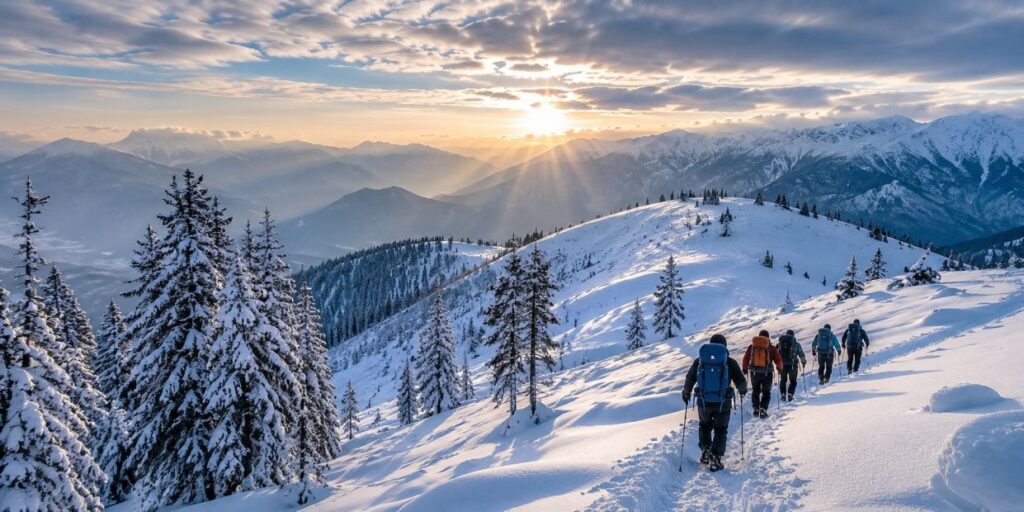
Kedarkantha is especially popular during the winter months, when snowfall transforms the trail into a completely different landscape. The pine forests, open meadows, and campsites can all be covered in snow, making it a beautiful place for a winter trekking experience.
If walking in fresh snow, camping in the cool mountain air, and waking up to the white Himalayan views is something you’ve always wanted to experience, winter is a great time to plan your Kedarkantha trek.
Beautiful Views from the Summit
Reaching the summit of Kedarkantha is one of the biggest highlights of this trek. On a clear day, the high slopes offer sweeping views of the surrounding Himalayan ranges.
Depending on the weather and visibility, you can see peaks and ranges like Swargarohini, Bandarpoonch, Black Peak (Kalanag), Yamunotri, Ranglana, and the Gangotri Range.
The view in the mountains can change quickly, but when the sky is clear, standing on top and looking at the surrounding peaks is a memorable moment.
A good option for first-time trekkers
Kedarkantha is often chosen by those embarking on their first Himalayan trek. This route does not involve technical climbing, and the entire trek can be completed in a fairly short time.
Nevertheless, it is still a high-altitude trek. The day of the ascent to the peak requires several hours of walking, and this can be even more challenging during snowfall or inclement weather. A little fitness preparation before the trek can make a huge difference.
This can be a good option for friends, small groups, solo travellers, and anyone experiencing Himalayan trekking for the first time.
Wander the Himalayan Forests.
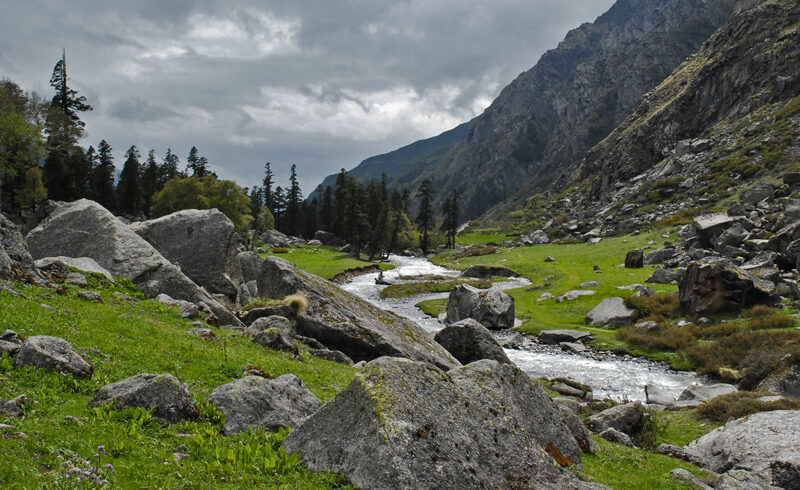
Forest sections are an essential part of the Kedarkantha experience. The route passes through forests of pine, oak, maple, and rhododendron, and the scenery changes as you gain altitude.
In winter, snow-covered trees and quiet forest paths give the route a completely different atmosphere. In spring and summer, the same forests become even greener and more colourful.
Enjoy the Campsite.
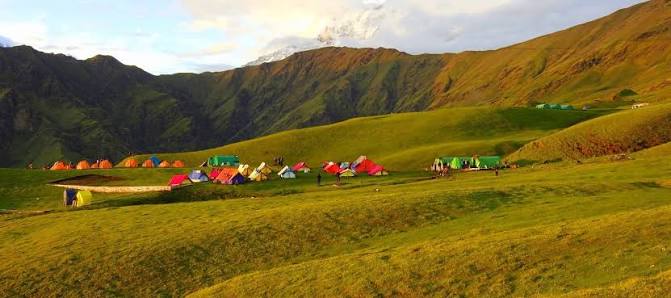
Camping is another memorable part of this trek. Juda Ka Talab and Kedarkantha Base Camp are places where you can relax after a long day of hiking and simply enjoy your surroundings.
Depending on the weather, you can spend the evening watching the sunset, lounging around the campsite, or gazing at the night sky. Away from the city lights, even a simple evening in the mountains can feel special.
Want to explore another trek from Sankri?
If you have a few extra days and want to experience the cultural side of the Himalayas, you might also consider the Har Ki Dun trek.
Starting from Sankri, this route takes you deeper into the valley, through traditional Himalayan villages, forests, open meadows, and views that have been closely associated with local mountain life for generations.
Kedarkantha and Har Ki Dun offer very different experiences, but both start from the beautiful Sankri area and give you the opportunity to experience the Himalayas off the beaten track.
Kedarkantha Trek – Route, Distance & Altitude Gain
Explore the five-day route from Dehradun to Sankri, Juda Ka Talab, Kedarkantha Base Camp and the summit, with approximate travel times and overnight stays.
| Day | Distance & Time | Altitude Gain | Highlights & Overnight Stay |
|---|---|---|---|
| Day 1 | 220 km (Drive) 8–10 hrs |
2,140 ft → 6,400 ft |
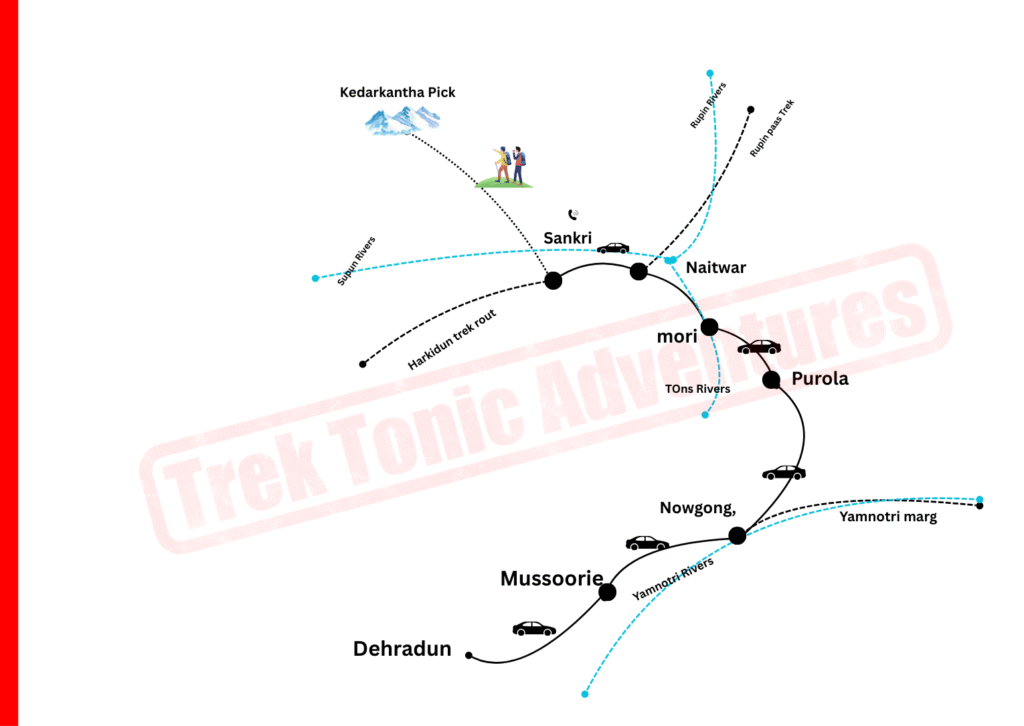
Scenic drive via Mussoorie, Purola and Mori.
Overnight: Guesthouse at Sankri. |
| Day 2 | 4 km (Trek) 3–4 hrs |
6,400 ft → 9,100 ft |
Trek through dense pine and oak forests, reaching the alpine lake.
Overnight: Camping at Juda Ka Talab. |
| Day 3 | 4 km (Trek) 3–4 hrs |
9,100 ft → 11,250 ft |
Gradual ascent through meadows and snowfields.
Overnight: Camping at Kedarkantha Base Camp. |
| Day 4 | 3 km (one way) 6–7 hrs (summit day) |
11,250 ft → 12,500 ft → 11,250 ft | Pre-dawn summit push, sunrise and 360° Himalayan views, including Swargarohini and Bandarpoonch. Descend to Base Camp. |
| Day 5 | 8 km (Trek) + 220 km (Drive) 8–9 hrs (total) |
12,500 ft → 6,400 ft → 2,140 ft | Trek back to Sankri, followed by the scenic drive to Dehradun. Journey concludes. |
Distance & Time220 km drive · 8–10 hours
Altitude2,140 ft → 6,400 ft
Highlights & StayScenic drive via Mussoorie, Purola and Mori. Overnight at a guesthouse in Sankri.
Distance & Time4 km trek · 3–4 hours
Altitude6,400 ft → 9,100 ft
Highlights & StayDense pine and oak forests, followed by an alpine lake. Overnight camping at Juda Ka Talab.
Distance & Time4 km trek · 3–4 hours
Altitude9,100 ft → 11,250 ft
Highlights & StayGradual ascent through meadows and snowfields. Overnight camping at Kedarkantha Base Camp.
Distance & Time3 km one way · 6–7 hours for summit day
Altitude11,250 ft → 12,500 ft → 11,250 ft
Highlights & StayPre-dawn summit push, sunrise and 360° Himalayan views, including Swargarohini and Bandarpoonch. Descend to Base Camp.
Distance & Time8 km trek + 220 km drive · 8–9 hours total
Altitude12,500 ft → 6,400 ft → 2,140 ft
HighlightsTrek back to Sankri and continue by road to Dehradun.
Note: Distances, timings and altitude figures are approximate. Actual conditions may vary with the route, weather, snow cover and group pace. Confirm the final itinerary before departure.
Best Time to Go on the Kedarkantha Trek
Kedarkantha can be visited in different seasons, but the experience varies significantly throughout the year. If you’re dreaming of a true snow trek, winter is worth a try. If you prefer lush green spaces, comfortable temperatures, and clear terrain, other seasons offer a completely different side to Kedarkantha.
Kedarkantha in Winter – December to March
Winter is the season most people associate with Kedarkantha. Snowfall can cover the forests, campsites, meadows, and higher reaches of the trail, giving the trek a classic winter feel.
For many trekkers, walking through the snow and reaching the Himalayan peaks in winter is the highlight of the trek. The weather can be very cold, especially during night and early morning climbs, so proper winter clothing and preparation are essential.
Why Choose Winter?
Snow-covered trails and campsites
Beautiful winter views
The authentic experience of trekking on snow in the Himalayas
Stunning views from high altitudes
Great for trekkers seeking winter adventure
Typical temperatures: Around -10°C to 10°C, depending on altitude and weather conditions.
Kedarkantha in Spring – April to May
As winter begins to recede, Kedarkantha gradually begins to green up. The forests bloom again, and rhododendrons add color to parts of the trail.
The weather is generally more comfortable than in winter, making it a great time for those who want to enjoy the views of the forests and mountains without dealing with heavy snow.
Why choose spring?
Pleasant trekking weather
Blooming rhododendrons
Fresh green views
Good visibility from the mountains on clear days
Beautiful conditions for photography
Typical temperatures: around 5°C to 18°C.
Kedarkantha in Summer – May to June
The trail takes on a completely different look in summer. Snow gradually disappears from most of the lower reaches, while the forests and meadows become lush.
Days are generally comfortable for trekking, and clear weather offers spectacular views of the surrounding mountains. This can also be a good option for travelers who prefer warm weather and don’t particularly want a snowy trek.
Why choose summer?
Comfortable daytime temperatures
Lush forests and open grasslands
Good visibility on clear days
Good walking conditions
Perfect for travelers who prefer trekking outside of winter
Typical temperatures: around 10°C to 22°C.
Kedarkantha during the monsoon – July to August
The monsoon once again transforms the nature of this region. The forests become lush, and the mountains can look especially fresh after the rain.
However, rain can also make trails muddy and slippery, while road conditions in the Himalayan region can change rapidly. Therefore, trekking in the monsoon requires more planning and familiarisation with local conditions before setting out.
What you can expect:
Lush forests
Fresh mountain views
Fewer trekkers than during peak season
Beautiful conditions for nature photography
Wet and sometimes slippery trails
Kedarkantha in autumn – September to November
After the monsoon, the skies often clear, and the mountains appear clear and fresh. If mountain views, rather than snow, are your priority, autumn is especially enjoyable.
The forests begin to change color, and the trails are usually drier than during the monsoon months. On clear days, the views from higher elevations can be spectacular.
Why choose autumn?
Clear mountain views
Good temperatures for trekking
Generally dry trails
Beautiful forest colors
Excellent conditions for enjoying the Himalayan views
Typical temperatures: around 5°C to 15°C.
Which season should you choose for Kedarkantha?
The right time depends on the type of experience you’re looking for.
If snow and winter trekking are your top priorities, December to March would be ideal, depending on the snowfall and trail conditions.
If you prefer lush greenery, blooming flowers, and more comfortable temperatures, spring and early summer might be a good option.
For clear mountain views and the refreshing post-monsoon landscape, consider September to November.
There’s no single season in the Himalayas that’s the same every year. Snowfall, rainfall, temperatures, and trail conditions can vary, so it’s always wise to check the latest conditions before planning your trip.
Do you want a different experience in the Himalayas?
If you enjoy hiking in the mountains but want something different from Kedarkantha, you can also check the Chopta Tungnath trek. It offers a different route and trekking experience from Kedarkantha, offering beautiful Himalayan views, alpine vistas and rhododendron forests.
Kedarkantha Trek Route and Highlights
The Kedarkantha Trek isn’t just about reaching the summit. The best part of the journey is watching the changing scenery as you ascend from Sankri. The route begins near the hill village of Sankri and gradually leads you through quiet forest paths, open spaces, snow-capped areas in winter, and finally to the bare slopes of the peak.
Each stage of the trail offers something different. The quiet forests provide a beautiful start to the trek, while places like Juda Ka Talab allow you to slow down and enjoy the mountain environment. Further, the views open up around Base Camp, and the final approach to the summit becomes even more spectacular.
Juda Ka Talab and Kedarkantha Base Camp are memorable camping spots along the route, but the actual experience can vary from season to season. Snowfall, rain, temperature, and local trail conditions can alter the appearance of a campsite, so photos from one location shouldn’t be taken as accurate for what you’ll see elsewhere.
To get the best idea of current trail conditions, it’s always beneficial to look at recent photos from the actual trekking season. On this page, we recommend using original photos of the route, including Sankri, Forest Trail, Juda Ka Talab, Kedarkantha Base Camp, Summit Approach, and Descent Route. Adding the month, year, location, and name of the photographer or guide to each caption also lets travelers know when and where the photos were taken.
What will travellers experience on this route?
The journey begins with a road trip from Dehradun to Sankri. It’s a beautiful mountain drive, but it can take most of the day. Actual arrival time may vary depending on traffic, weather, road conditions, and local travel restrictions, so it’s best to allow some flexibility in your plans.
Once the trek begins, the walking experience varies daily. Some sections are easy and enjoyable, while others involve continuous climbing. In winter, snow can make the trail slower and more physically demanding. Your walking time will depend on the group’s pace, the amount of snow on the route, rest breaks, and personal fitness.
Summit day is usually the biggest challenge of the trek. The day begins early, often before sunrise, so trekkers can reach the higher slopes on time. Cold temperatures, darkness, snow, and a long climb can make this section difficult, but maintaining a comfortable pace and taking regular breaks can make the climb much easier.
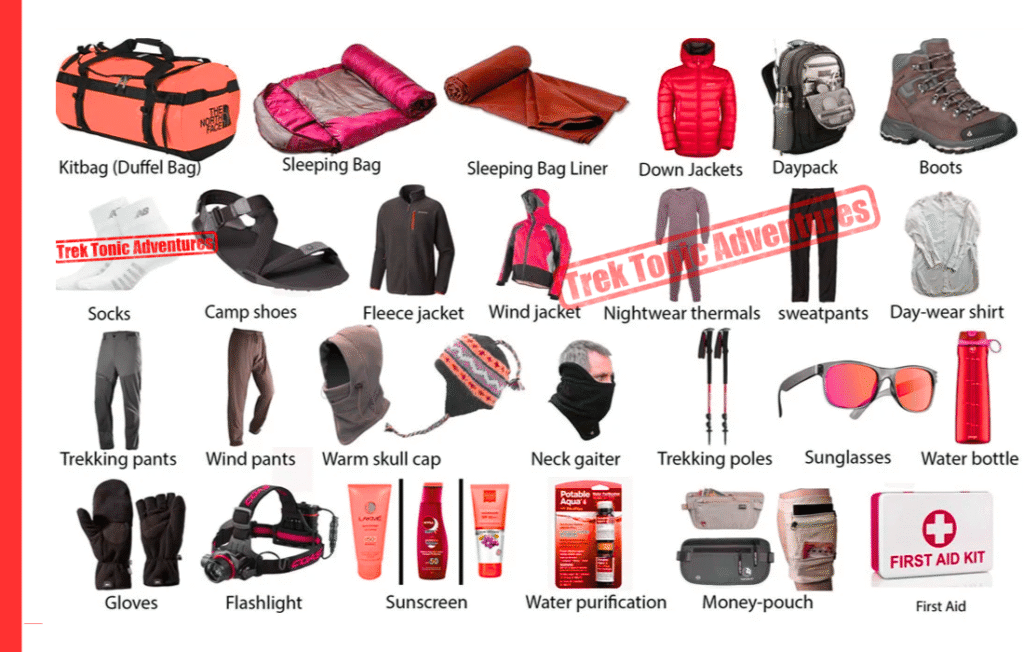
A headlamp, appropriate layers of clothing, plenty of drinking water, and suitable trekking shoes are especially important for climbing to the summit. Most importantly, stay with the group and follow the instructions of your trek leader or guide, as mountain conditions can change rapidly.
By the time you reach the summit, the hard work of the previous few hours becomes part of the experience. You get a chance to stop, look at the surrounding mountains, and appreciate the journey that brought you there. Then, the descent takes you back to a different perspective on the same landscape, giving the Kedarkantha route its full character—from village roads and forests to snowfields, campsites, and finally, the summit.
The appeal of the Kedarkantha Trek extends far beyond the summit. As you travel from Sankri, the landscape gradually transforms from a village setting into dense forest trails, an alpine lake, open meadows, and finally an exposed summit ridge. Camping conditions around Juda Ka Talab and Kedarkantha Base Camp can vary depending on the weather, so published photographs should not be presented as a guarantee of conditions in every season.
Add your original photographs here: Sankri arrival, forest trail, Juda Ka Talab, base camp, summit approach, and return route. Each image should include the month/year, location, and name of the photographer or guide in the caption.
What You Will See During the Kedarkantha Trek
Forest Trails
Dense oak and pine forests surround the trail, filled with birdsong and soft needle-covered paths that make walking surprisingly pleasant.
Juda-ka-Talab
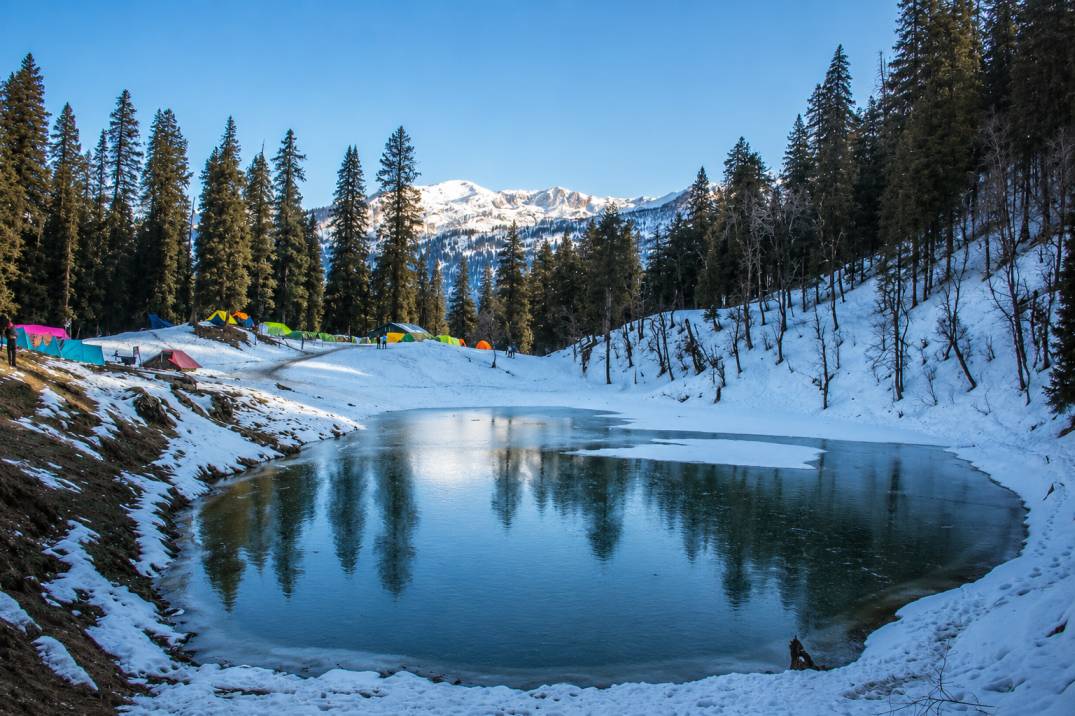
A serene alpine lake that freezes solid in winter and turns reflective and calm in warmer months—one of the most photographed spots on the Kedarkantha Trek route.
Open Meadows
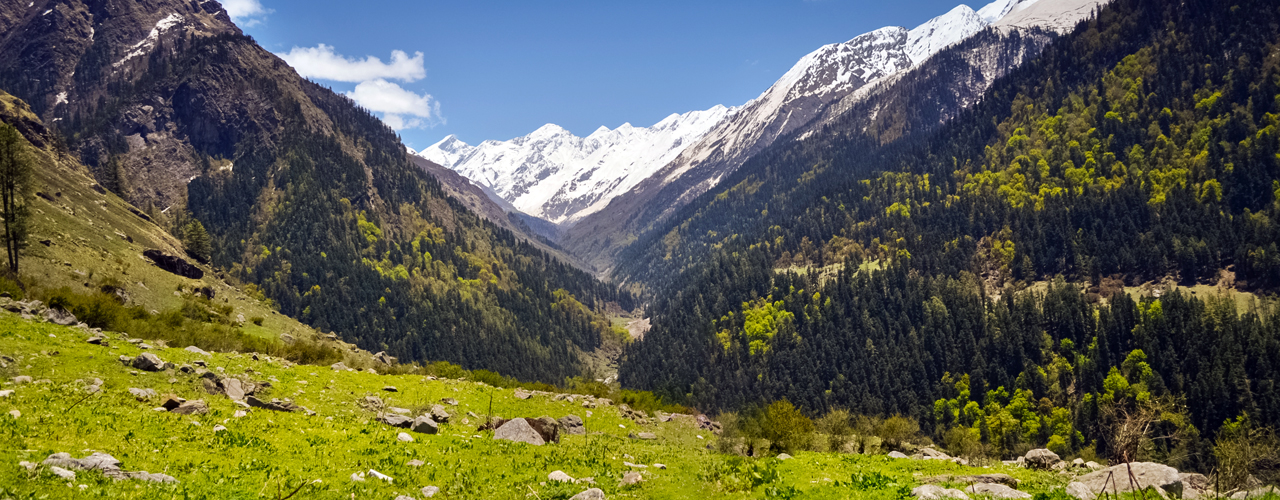
Wide snowfields or green pastures with stunning views of Bandarpunch, Swargarohini, and Black Peak (Kala Nag).
Summit Ridge
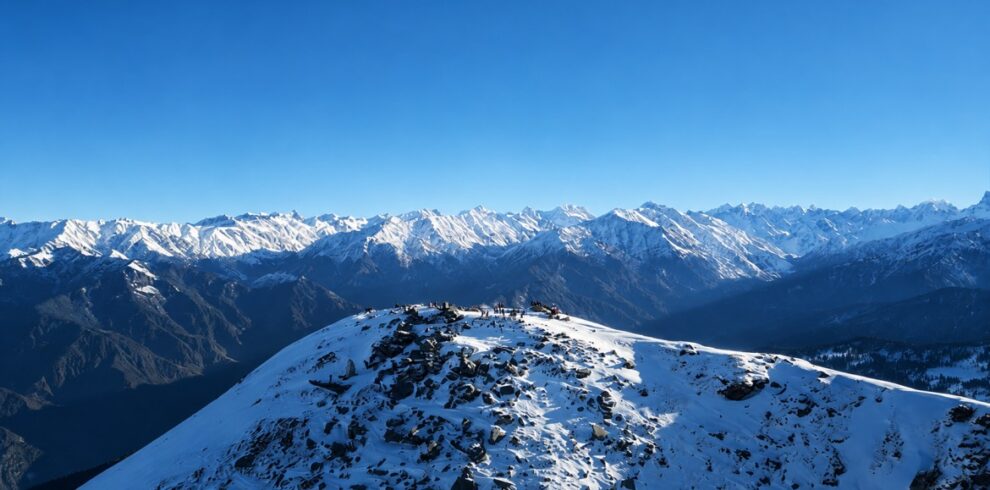
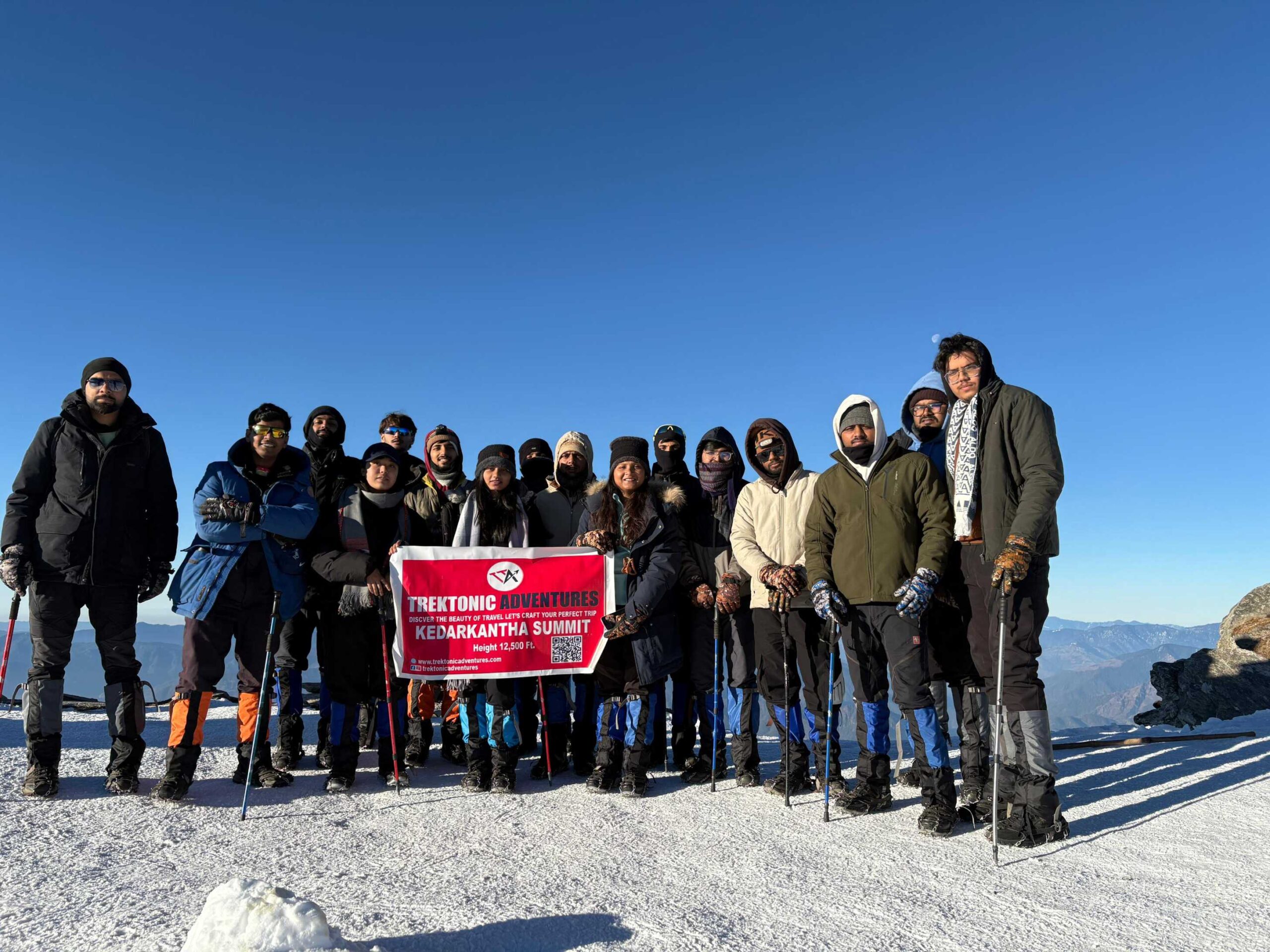
A pre-dawn summit push under headlamps that slowly turns golden as the sun rises, offering 360-degree Himalayan views, a signature highlight of the Kedarkantha trek.
Sankri Village – The Heart of the Kedarkantha Trek
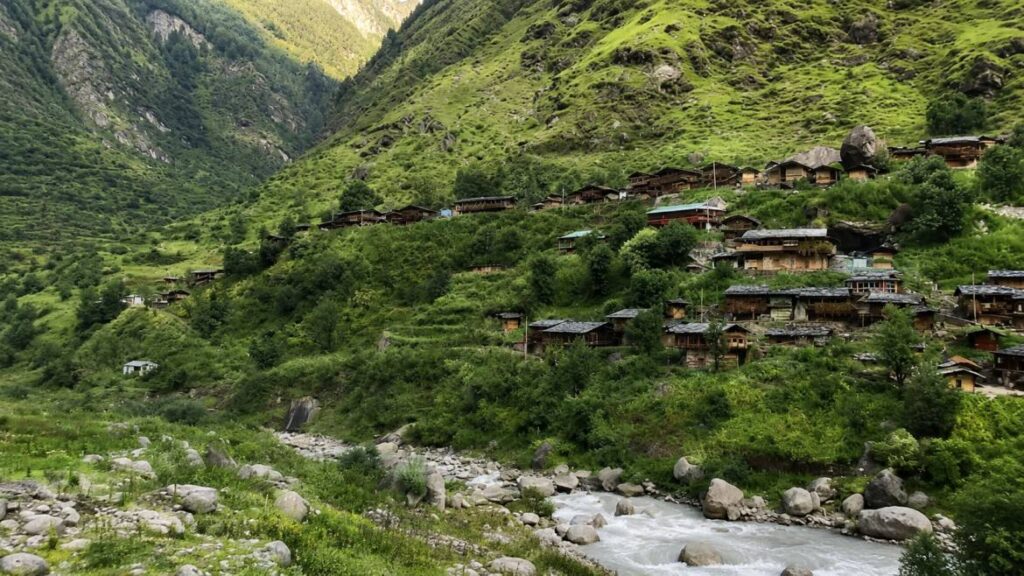
Sankri isn’t just the base camp; it sets the rhythm for the entire Kedarkantha Trek experience. Traditional wooden homes, warm Garhwali hospitality, comforting local food, and evenings spent near crackling fireplaces make this village unforgettable.
If you have extra time, explore local shops, sip jaggery chai, or snack on roasted peanuts—small moments that make the Kedarkantha Trek feel personal and grounded.
Kedarkantha Trek Distance and Altitude
The Kedarkantha Trek gradually takes you from the quiet village of Sankri to the high mountain slopes of the Kedarkantha summit. Along the way, the altitude increases steadily, and the landscape changes from forested trails to open meadows and higher mountain terrain.
Here is a quick look at the main points along the route:
| Location | Approx. Altitude |
|---|
| Sankri Village | 6,400 ft |
| Juda Ka Talab | 9,100 ft |
| Kedarkantha Base Camp | 11,250 ft |
| Kedarkantha Summit | 12,500 ft |
The exact distance can vary slightly depending on the route and campsite arrangements, but the commonly followed sections are approximately:
Sankri to Juda Ka Talab: Around 4 km
Juda Ka Talab to Kedarkantha Base Camp: Around 4 km
Base Camp to Kedarkantha Summit: Around 3 km
Total trekking distance: Approximately 20 km for the complete round trip
The distance itself may not sound very long, but altitude, snow, weather and the steepness of some sections can make certain days more challenging than the kilometers suggest. Walking at a steady pace and taking enough rest is important, especially during the summit climb.
What Our Kedarkantha Trek Package Covers
We take care of the main arrangements during the trek so that you can concentrate on enjoying the trail and the mountains.
Accommodation
Your stay includes a guesthouse in Sankri and twin-sharing tents during the trekking days. Sleeping bags and liners are provided for the camping nights.
Meals
Fresh vegetarian meals are provided during the trek, including breakfast, lunch and dinner. For winter departures, evening snacks and hot-water bottles are also provided to make the colder evenings more comfortable.
Guide & Trek Crew
An experienced trek leader, assistant guides and local support staff accompany the group throughout the trek. They help with route guidance, campsite arrangements and other day-to-day requirements.
Permits & Forest Fees
The required forest permits and applicable camping fees are included in the package, subject to the final itinerary and local regulations.
Local Transport
Transport arrangements between Sankri and the designated trek points are included as mentioned in the itinerary. Transfers between Dehradun and Sankri can also be arranged as an optional service, depending on the package you select.
Distances, altitudes, campsite locations and package inclusions may vary slightly due to weather, local regulations and trail conditions. We recommend confirming the latest details with Trek Tonic Adventures before your departure.
Govind Wildlife Sanctuary & Himalayan Views on the Kedarkantha Trek
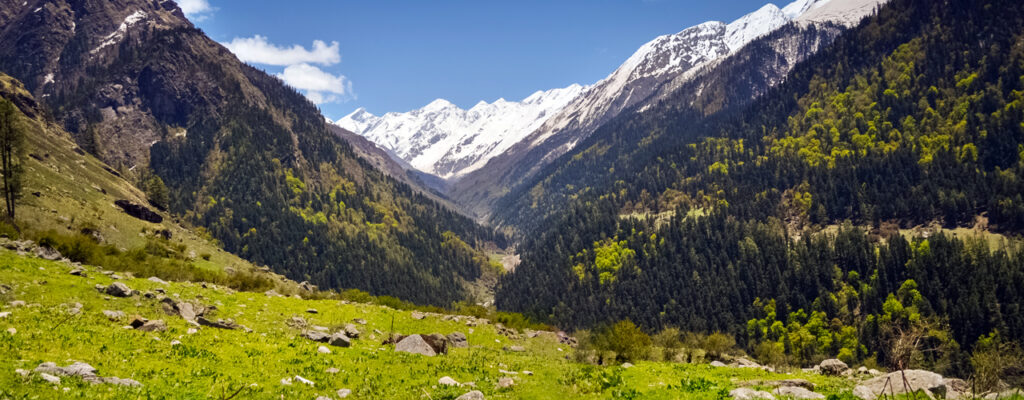
The Kedarkantha Trek is located within the protected Govind Wildlife Sanctuary in Uttarkashi, Uttarakhand, a region celebrated for its rich biodiversity, dense coniferous forests, alpine meadows, and pristine mountain landscapes. As trekkers move through forests of pine, oak, maple, and rhododendron, they experience one of the most scenic trekking routes in the Indian Himalayas. The sanctuary is home to diverse Himalayan flora and fauna, making the journey as rewarding as the summit itself.
One of the biggest highlights of the Kedarkantha Summit is its spectacular 360-degree panoramic view of some of the most iconic Himalayan peaks. From the top, trekkers can witness breathtaking views of Swargarohini, Bandarpoonch, and Black Peak (Kalanag), along with the majestic Gangotri and Yamunotri mountain ranges. During winter, these snow-covered peaks create a stunning backdrop, making the Kedarkantha Trek one of the best winter treks in Uttarakhand for photography, nature lovers, and adventure enthusiasts alike.
Kedarkantha Mythology and Legends
Kedarkantha isn’t just known for its snow-capped paths and stunning views from its peak. The mountain is also deeply connected to local traditions and stories related to Lord Shiva, making this trek even more special.
The name “Kedarkantha” is commonly associated with Lord Shiva and is often interpreted as “Lord Shiva’s Throat.” According to a local story, after the Kurukshetra War, the Pandavas wished to meet Lord Shiva. However, Shiva is believed to have taken the form of a bull to escape them and passed through the Himalayan region.
Local stories say that Kedarkantha was one of the places where Lord Shiva is believed to have spent time meditating. According to the story, he eventually left the area and headed towards the Kedarnath region.
Another famous story is associated with “Juda Ka Talab,” one of the most beautiful places on the Kedarkantha trail. According to local belief, this lake was formed by a drop of water that fell from Lord Shiva’s matted locks, or jata, while he was meditating in the mountains.
Whether you believe these stories as mythology, local tradition, or simply enjoy them as part of your Himalayan experience, they give the trail a deeply cultural dimension. As you wind through the forests to reach places like Juda Ka Talab, you’re not only experiencing a beautiful sight—you’re also traversing a region where nature, spirituality, and local traditions have been intertwined for generations.
For trekkers, these stories make Kedarkantha more than just a peak climb. The snow, forests, villages, and mountain views add to the thrill, while stories from local communities give the trek its cultural dimension.
Local Safety Tips & Pro Trekking Hacks
Network Island
Mobile connectivity in Sankri is limited. BSNL and Jio networks work only at a few spots. Near the Sankri bus stand, there’s a famous rock that locals call the “Calling Point,” where you’ll usually find the strongest signal.
Protect Your Toes
During the descent from the summit, loosen your boot laces slightly. This prevents your toes from repeatedly hitting the front of your boots, reducing the risk of Trekker’s Toe (bruised or black toenails).
The Camphor Trick
If you feel short of breath while climbing toward the summit, keep a small piece of camphor wrapped in a handkerchief and inhale its aroma occasionally. Many experienced local trekkers believe it provides temporary relief when trekking at higher altitudes.
Note: Camphor may provide a refreshing sensation, but it should not be considered a treatment for altitude sickness or oxygen deficiency. If symptoms become severe, descend immediately and seek medical assistance.
Hidden Photography Spots
Swargarohini Reflection at Juda Ka Talab
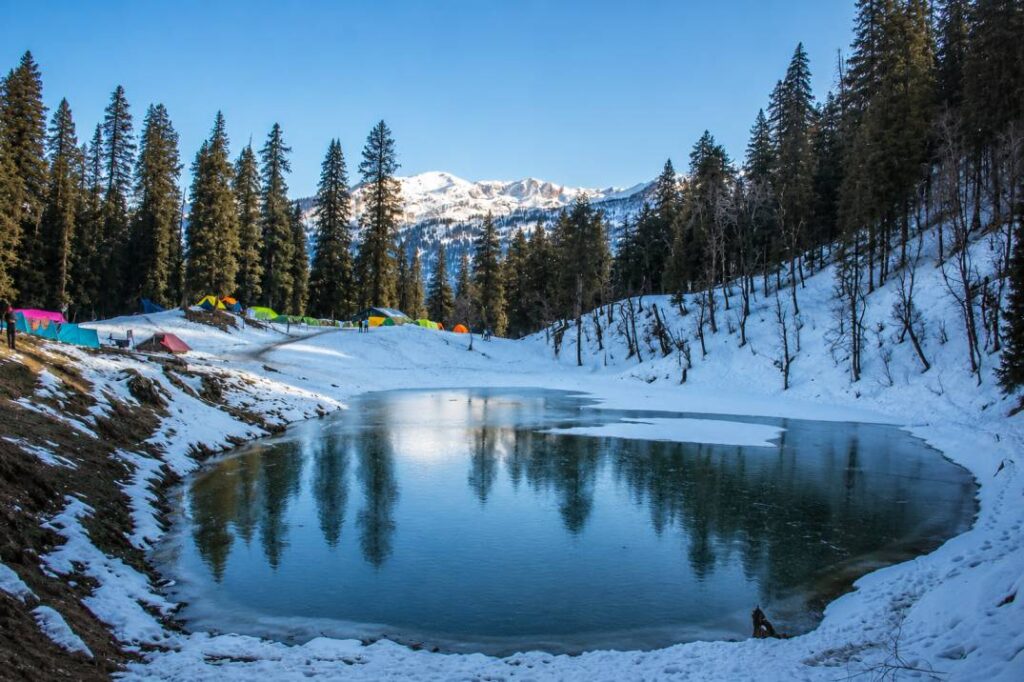
Reach Juda Ka Talab around 6:30 AM. As the first rays of sunlight touch the frozen lake, the magnificent Swargarohini Peaks reflect beautifully on the water, creating one of the most breathtaking photography opportunities on the trek.
The Magical Sunset from Kedarkantha Base Camp
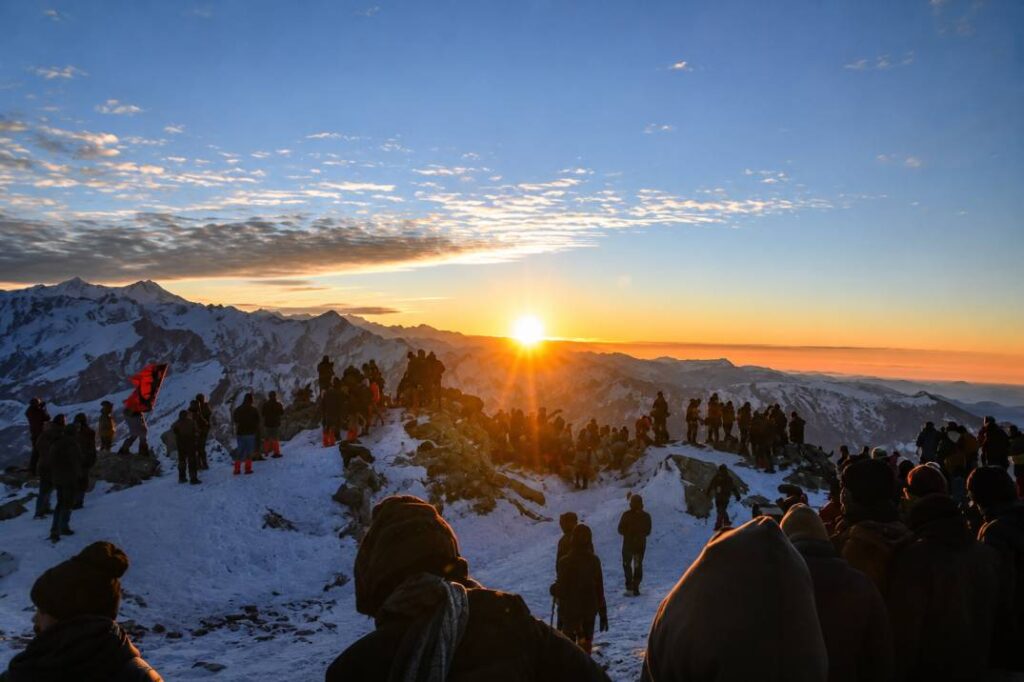
Many trekkers believe the sunset from Kedarkantha Base Camp is even more spectacular than the summit itself. The entire Himalayan horizon glows in shades of orange and gold, offering unforgettable panoramic views.
Who is the Kedarkantha Trek Right For?
Kedarkantha can be a good option for those who want to experience Himalayan trekking without any technical mountain climbing. This route is often considered suitable for beginners, but it is still a proper high-altitude trek and requires a reasonable level of fitness.
If you are comfortable walking for several hours a day, climbing rugged mountain paths, and spending nights in cold places, you may want to consider Kedarkantha for your first Himalayan trekking experience. Difficulties can vary depending on the season, and winter snow can make some sections slower and more physically demanding.
For first-time trekkers, a little preparation before the trip can make the experience more enjoyable. Regular walking, jogging, stair climbing, or basic fitness exercises can help you build the stamina needed for long trekking days. You should also be comfortable with early morning starts, changing weather, and walking at a steady pace rather than rushing down the trail.
Summit day is typically the most demanding part of the trek. The climb typically begins early in the morning, often before sunrise, and involves several hours of walking up and down. In winter, snow and cold temperatures can increase the challenge, so proper clothing, appropriate footwear, and following the trek leader’s instructions are especially important.
Families and students may also consider Kedarkantha, but the appropriateness of the trek is a matter of individual consideration. Age, fitness, previous trekking experience, and ability to withstand cold weather can all play a role. Not every trek operator has a set age limit, so families traveling with children should check with their chosen operator about current age requirements, supervision arrangements, and emergency procedures before booking.
If you have a pre-existing medical condition, have previously experienced altitude-related problems, or are unsure about your ability to manage strenuous physical activity, it’s wise to seek appropriate medical advice before planning a trek. When travelling with children or anyone with specific health conditions, enquire about the operator’s requirements and safety measures in advance.
Simply put, Kedarkantha is easy for beginners, but it’s no ordinary mountain walk. With proper preparation, the right equipment, and a comfortable pace, it can be a good start to Himalayan trekking.
Who May Not Be the Right Fit?
Kedarkantha should not be treated as a sightseeing trip that requires little physical effort. It may not be suitable for travellers who cannot comfortably manage sustained walking, are unwilling to trek in cold or snowy conditions, or do not want to follow safety and pacing instructions from the trek team.
Similarly, travellers who are unwilling to accept changes caused by snow, weather, trail conditions, or safety decisions should reconsider whether a Himalayan winter trek is right for them. Mountain conditions can change quickly, and reaching the summit should never take priority over the instructions of the trek leader or the safety of the group.
In short, Kedarkantha is accessible to many first-time trekkers, but it still requires preparation, realistic expectations, adequate fitness, and respect for mountain conditions. Its beginner-friendly classification should be understood as a description of the trek’s overall technical difficulty—not as a guarantee that every traveller will find it easy.
Kedarkantha Trek Highlights
- Kedarkantha Summit - Reach the famous Kedarkantha Summit at 12,500 feet and witness one of the best 360-degree Himalayan views in India.
- Snow Trek Experience - Experience snow-covered trails, frozen forests, and pristine Himalayan landscapes during winter.
- Juda Ka Talab - Explore the beautiful alpine lake surrounded by pine forests and snow-clad mountains.
- Stunning Himalayan Peaks Witness spectacular views of: Swargarohini Bandarpoonch Black Peak Ranglana Gangotri Range Yamunotri Range
- Beautiful Campsites - Enjoy camping at Juda Ka Talab and Kedarkantha Base Camp under clear Himalayan skies.
- Beginner-Friendly Adventure - The Kedarkantha Trek is one of the best beginner-friendly Himalayan treks and an ideal introduction to high-altitude trekking.
- Rich Himalayan Flora and Fauna - Spot various Himalayan birds and wildlife while trekking through Govind Wildlife Sanctuary.
- Perfect Blend of Adventure and Nature - From snow-covered trails and dense forests to breathtaking summit views and peaceful campsites, the Kedarkantha Trek Package 2026 offers an unforgettable Himalayan adventure for every traveler.