
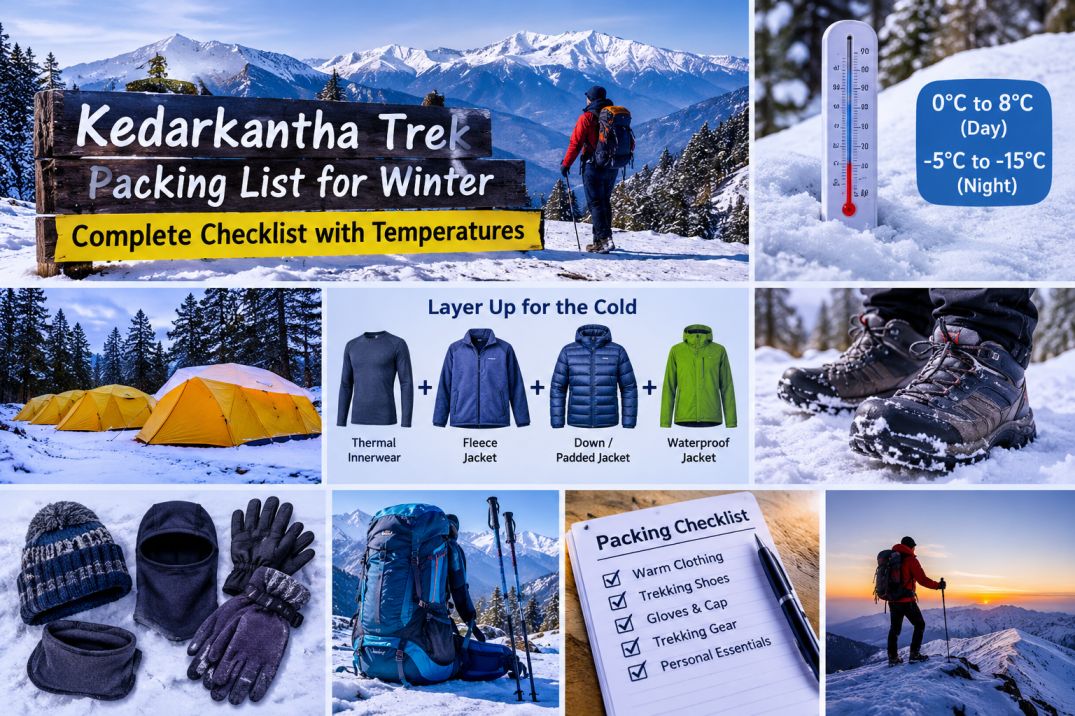
Kedarkantha Trek Packing List for Winter: Complete Checklist with Temperatures
Packing for the Kedarkantha Trek in winter is not just about carrying warm clothes. The temperature changes as you move from Sankri towards Juda Ka Talab, Kedarkantha Base Camp and the summit. A jacket that feels comfortable in Sankri may not be enough during an early-morning summit climb.
This is where many first-time trekkers make mistakes. Some carry too many clothes but miss proper gloves or waterproof footwear. Others bring ordinary sports shoes and realise their mistake when they start walking on snow.
The important thing is to pack according to the weather, altitude and duration of the trek.
Kedarkantha reaches approximately 12,500 ft (3,810 metres), and winter temperatures can fall below freezing, particularly at higher campsites. This guide covers the clothing, footwear, personal equipment and other essentials you should carry for a winter trek, along with approximate temperature conditions.
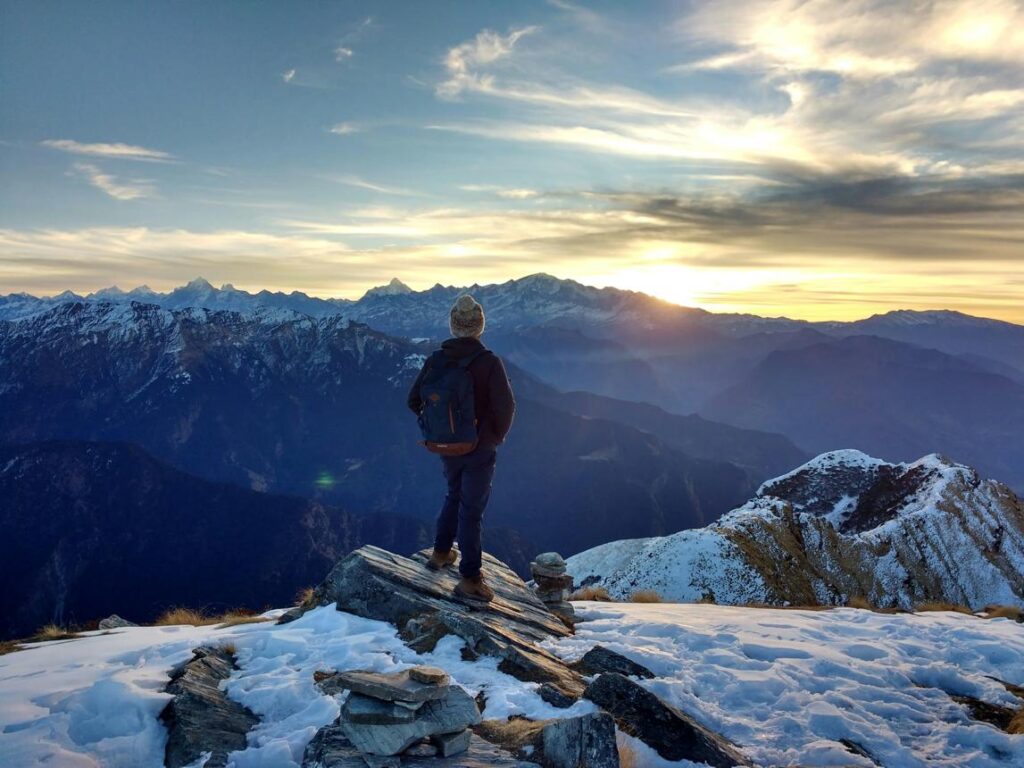
Kedarkantha Winter Trek Temperature: How Cold Does It Get?
Before preparing your packing list, understand the temperature you may experience during the trek.
The temperature is not the same throughout the route. Sankri is at a lower altitude, while Juda Ka Talab and Kedarkantha Base Camp are much higher. Nights and early mornings are generally colder than daytime.
Month-wise Temperature Guide
| Month | Day Temperature | Night Temperature |
|---|---|---|
| December | 0°C to 8°C | -5°C to -10°C |
| January | 0°C to 8°C | -10°C to -15°C |
| February | 2°C to 10°C | -5°C to -12°C |
| March | 5°C to 15°C | -2°C to 5°C |
These are approximate planning ranges, not guaranteed daily temperatures. Conditions depend on snowfall, altitude, wind and the weather during your trek. During particularly cold conditions, temperatures at higher camps can fall further.
Altitude & Winter Conditions Guide
| Location | Approximate Altitude | Winter Conditions |
|---|---|---|
| Sankri Village | 6,400 ft | Comparatively warmer during daytime |
| Juda Ka Talab | 9,100 ft | Colder nights and possible freezing conditions |
| Kedarkantha Base Camp | 11,250 ft | Sub-zero nights and strong cold winds |
| Kedarkantha Summit | 12,500 ft | Very cold during early-morning summit climbs |
The summit climb usually begins before sunrise. At that time, you are exposed to cold air and wind while walking through snow. Proper gloves, warm layers and face protection become particularly important.
1. Winter Clothing: What Should You Carry?
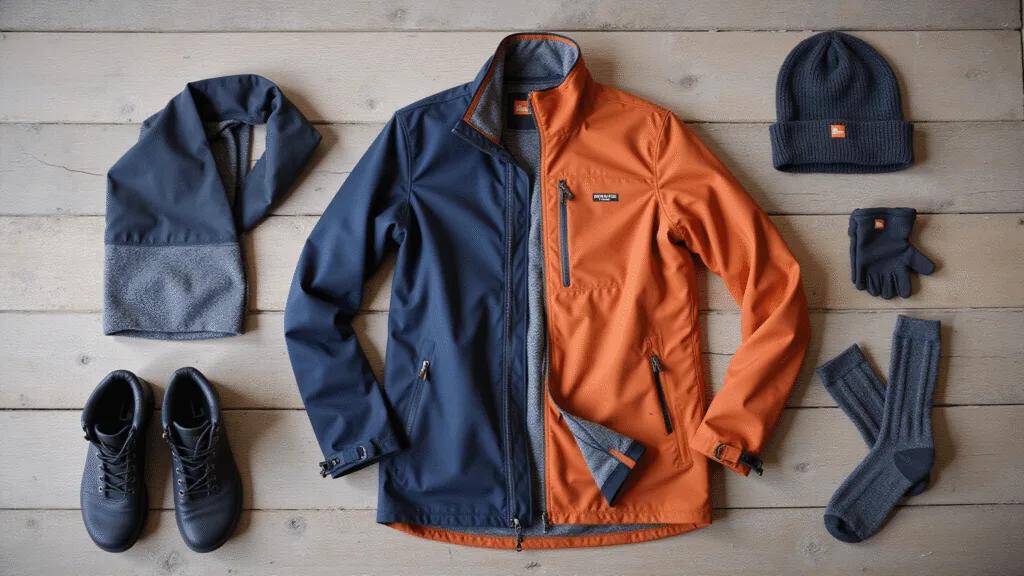
Clothing is the most important part of your winter packing list. Instead of wearing one extremely heavy jacket throughout the day, use multiple layers.
This allows you to remove or add clothing depending on your walking speed and temperature.
Thermal Innerwear – 2 Sets
Carry two sets of thermal innerwear, including:
2 thermal tops
2 thermal bottoms
Thermal clothing acts as your base layer. It helps retain body warmth while keeping the skin more comfortable.
Avoid wearing cotton innerwear during long trekking hours because cotton retains moisture and takes longer to dry.
Fleece Jacket – 1 or 2
A fleece jacket is useful as an insulating middle layer.
Carry one good-quality fleece jacket. A second lightweight fleece or warm mid-layer can be useful if you feel cold easily or are trekking during January.
You can wear a thermal top underneath and a fleece jacket over it.
Down or Padded Jacket – 1
A warm insulated jacket is important for winter camping and summit mornings.
Choose a jacket that provides sufficient insulation for sub-zero conditions. A good down or synthetic insulated jacket can help retain body heat when you are sitting at camp or taking breaks.
Make sure it fits comfortably over your other layers.
Waterproof and Windproof Jacket – 1
Snowfall, wind and changing mountain weather can make the trail uncomfortable.
Carry a waterproof and wind-resistant outer shell. It protects your inner clothing from moisture and helps reduce heat loss caused by wind.
A normal fashion jacket or light hoodie is not a substitute for a proper outer layer.
Trekking Pants – 2 Pairs
Carry two pairs of comfortable trekking pants.
Your trekking trousers should allow easy movement and should not restrict your knees while climbing or descending.
For winter conditions, water-resistant or quick-drying trekking pants are preferable. If you expect wet snow, consider suitable waterproof outer trousers.
Avoid ordinary jeans because they become uncomfortable when wet and take a long time to dry.
Full-Sleeve T-Shirts – 2
Carry two quick-dry full-sleeve T-shirts.
They can be worn during the day when temperatures are comparatively comfortable or used as an additional clothing layer.
Avoid carrying several heavy cotton T-shirts. They take up space and are not particularly useful for winter trekking.
2. Gloves, Caps and Other Winter Accessories
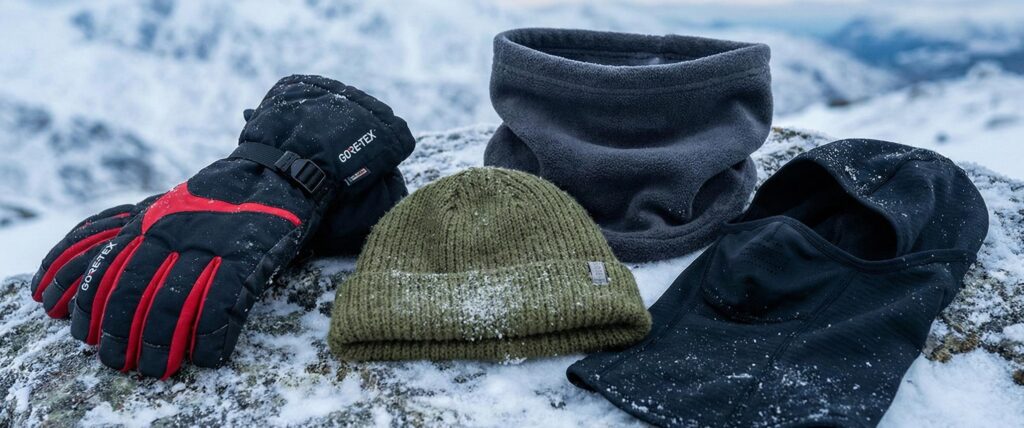
Your hands, ears, face and neck are exposed to cold weather during the trek. These small items make a considerable difference.
Gloves – 2 Pairs
Carry two different types of gloves:
Inner or fleece gloves for basic warmth.
Waterproof insulated gloves for snow and cold summit conditions.
The outer gloves should allow you to hold trekking poles and manage your equipment without exposing your hands unnecessarily.
Ordinary woollen gloves may become wet while handling snow.
Woollen Cap – 1
A warm woollen cap is essential during winter camping and early-morning trekking.
Choose one that covers your ears properly.
Balaclava or Neck Warmer – 1
A balaclava or neck gaiter protects your face and neck from cold winds.
It is particularly useful during the summit climb when you start walking before sunrise.
Woollen Socks – 3 to 4 Pairs
Carry three or four pairs of warm trekking socks.
Keep your feet dry and change your socks whenever they become wet.
Avoid wearing multiple thick socks if they make your trekking shoes too tight. Restricted circulation can make your feet feel colder.
3. Trekking Shoes: The Most Important Footwear
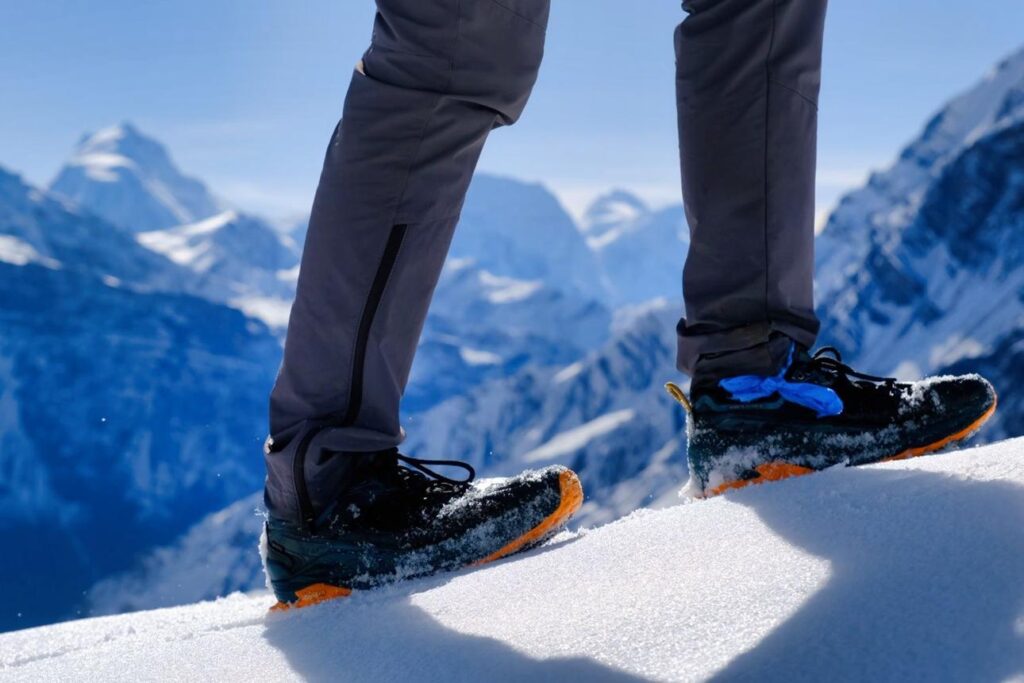
Your footwear can affect your entire trekking experience.
For a winter Kedarkantha trek, choose trekking shoes with the following features:
Good ankle support.
Waterproof or water-resistant construction.
Strong grip on slippery and snowy surfaces.
Comfortable fit with enough toe space.
Suitable sole for uneven mountain trails.
Do not buy new shoes immediately before the trek. Wear them on regular walks and stairs beforehand so that you can identify fitting problems.
Should You Carry Snow Boots?
Regular winter trekking shoes with appropriate grip and waterproofing are generally suitable for the planned route, depending on snow conditions.
The trek operator or local trek leader should advise whether additional traction equipment is needed for the actual trail conditions.
Also carry a lightweight pair of slippers for use inside the campsite or accommodation.
4. Backpack and Luggage
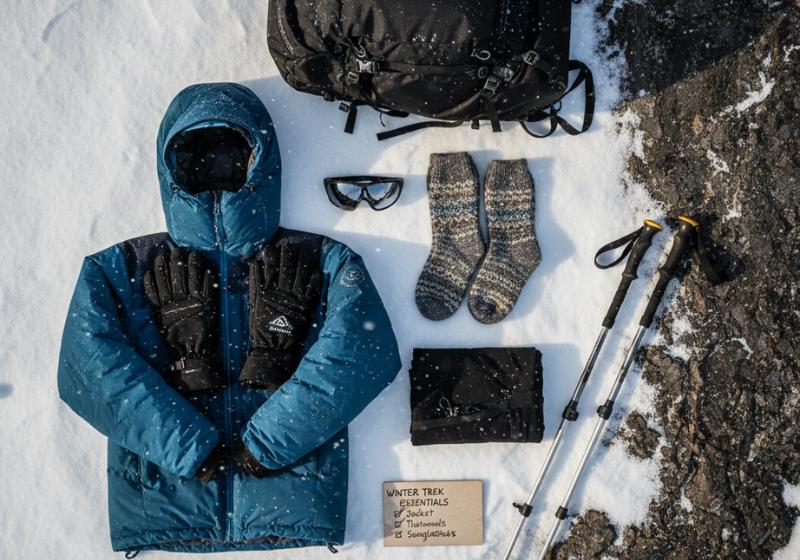
You do not need to carry your entire luggage on your back during the trek.
A comfortable trekking backpack of approximately 40–50 litres is suitable for carrying your personal trekking essentials, depending on how you organise your equipment.
Look for:
Comfortable shoulder straps.
A supportive waist belt.
Rain cover.
Multiple compartments.
Adjustable straps.
Keep heavier items close to your back and frequently used items within easy reach.
If you have luggage that you do not need on the trail, ask your trek operator about storage or luggage arrangements at Sankri.
5. Essential Trekking Equipment
Apart from clothes and footwear, a few pieces of equipment are useful during the winter trek.
| Item | Quantity | Purpose |
|---|---|---|
| Headlamp or torch | 1 | Early-morning summit climb |
| Trekking poles | 1 or 2 | Balance on uneven terrain |
| Water bottle | 1–2 | Drinking water |
| Sunglasses | 1 | Protection from snow glare |
| Power bank | 1 | Charging personal devices |
| Rain cover | 1 | Protecting your backpack |
| Small daypack | 1 | Carrying essentials during the day |
Why Do You Need a Headlamp?
The summit climb generally starts early in the morning, often before sunrise.
A headlamp keeps both hands free while walking. It is more convenient than holding a mobile phone torch throughout the climb.
Check its battery before leaving Sankri and carry spare batteries or ensure it is fully charged.
Why Are Sunglasses Important?
Snow reflects sunlight, which can cause discomfort and glare.
Carry good-quality UV-protective sunglasses. They are particularly useful when walking through open snow-covered sections.
6. Personal Care and Toiletries
Carry only the toiletries you actually need. There is no reason to take full-sized bathroom products on a short winter trek.
Your personal care checklist should include:
Toothbrush and small toothpaste.
Small soap or handwash.
Quick-dry towel.
Sunscreen SPF 30–50.
Lip balm.
Moisturiser.
Wet wipes.
Hand sanitiser.
Personal medicines.
Cold and dry mountain air can make your skin and lips uncomfortable. Sunscreen and lip balm are useful even when the weather is cold.
7. Personal Medical Kit and Important Documents
Always keep your essential medicines and documents accessible.
Basic Medical Kit
Consider carrying:
Your regular prescription medicines.
Personal first-aid supplies.
Blister plasters.
Basic wound dressings.
Any medicines recommended by your doctor.
If you have a medical condition or require specific medication, consult your doctor before undertaking a high-altitude trek.
Do not take medicines for altitude sickness without appropriate medical advice.
Important Documents
Keep the following items ready:
Government-issued photo ID.
Required permit or registration details, if applicable.
Emergency contact information.
Travel and medical insurance details, if available.
Keep your documents protected from snow and moisture.
8. Water and Food Essentials
Hydration is important even when you do not feel thirsty in cold weather.
Carry one or two reusable water bottles, depending on your needs and the arrangements made by your trek operator.
A suitable insulated bottle can help keep drinking water from becoming uncomfortably cold.
You can also carry a small quantity of personal snacks, such as:
Dry fruits.
Nuts.
Energy bars.
Chocolates.
These are useful during long walking sections. However, do not carry excessive food when meals and snacks are already included in your trek arrangements.
9. What Not to Carry on the Kedarkantha Trek
Overpacking is a common problem among first-time trekkers.
A heavy backpack makes uphill walking and long descents more difficult. You should carry what is necessary rather than packing everything you might use at home.
Avoid carrying:
Heavy jeans.
Multiple unnecessary sweaters.
Extra pairs of casual shoes.
Large cosmetic and toiletry bottles.
Heavy cotton towels.
Too many T-shirts.
Unnecessary electronic equipment.
Large quantities of packaged snacks.
Keep your personal luggage simple and practical.
10. What Is Provided by the Trek Operator?
Before buying trekking equipment, check what is already included in your package.
For the Trek Tonic Adventures Kedarkantha package, the listed arrangements include accommodation, meals, guide support, permits and camping arrangements. Sleeping bags and liners are also mentioned as provided during camping.
Personal trekking gear such as shoes, jackets and backpacks should be arranged by the trekker.
It is still important to confirm the final equipment list before departure because inclusions can vary with the package and operating arrangements.
Here is a simple comparison:
| Equipment | What to Do |
|---|---|
| Trekking shoes | Carry your own |
| Thermal clothing | Carry your own |
| Fleece jacket | Carry your own |
| Insulated jacket | Carry your own |
| Waterproof gloves | Carry your own |
| Trekking backpack | Carry your own |
| Sunglasses | Carry your own |
| Sleeping bag | Confirm with operator; listed as provided |
| Sleeping bag liner | Confirm with operator; listed as provided |
| Tent accommodation | Included in the trekking arrangements |
| Meals | Included in the trekking arrangements |
Do not purchase expensive camping equipment without checking the package inclusions first.
Frequently Asked Questions
1. What clothes should I wear for the Kedarkantha trek in winter?
Wear thermal innerwear, a fleece jacket, an insulated jacket and a windproof or waterproof outer layer. You can adjust the layers depending on the temperature and your activity level.
2. How cold does Kedarkantha get in December and January?
During December and January, daytime temperatures are generally around 0°C to 8°C, while nighttime temperatures can fall between -5°C and -15°C at higher campsites. Actual conditions vary with altitude and weather.
3. Are waterproof trekking shoes necessary for Kedarkantha?
Waterproof or water-resistant trekking shoes are recommended during winter because snow can make your footwear wet. Shoes should also provide good grip and ankle support.
4. How many pairs of socks should I carry?
Three to four pairs of warm trekking socks are generally sufficient for a short Kedarkantha winter trek. Keep your feet dry and avoid wearing shoes that feel tight with thicker socks.
5. Do I need to carry a sleeping bag for Kedarkantha?
Check your trekking package before buying one. Sleeping bags and liners are listed among the camping arrangements provided in the Trek Tonic Adventures package. Confirm the current arrangements before departure.
6. Is a down jacket necessary for the Kedarkantha winter trek?
An insulated down or padded jacket is strongly recommended for cold campsites and early-morning summit climbs. Choose one suitable for sub-zero mountain conditions.
7. Do I need sunglasses for a winter trek?
Yes. Snow glare can be uncomfortable for your eyes, especially in open areas under direct sunlight. Carry UV-protective sunglasses.
8. Can beginners complete the Kedarkantha trek in winter?
Kedarkantha is commonly undertaken by beginners, but winter snow, cold temperatures and the summit climb make preparation important. Suitable fitness, proper clothing and following the trek leader’s instructions are essential.
Final Thoughts
A good packing list does not mean carrying the maximum amount of equipment. It means carrying the right equipment for the conditions you are likely to face.
For Kedarkantha, give special attention to your thermal layers, insulated jacket, gloves, trekking shoes and warm socks. These are the items that make the biggest difference during cold nights and early-morning walking.
Before starting your journey, check the weather and confirm the equipment provided by your trek operator.
If you are planning your winter adventure, explore the Kedarkantha Trek package, itinerary and complete travel details before finalising your trip. Proper preparation will help you focus on the trail instead of worrying about missing equipment.