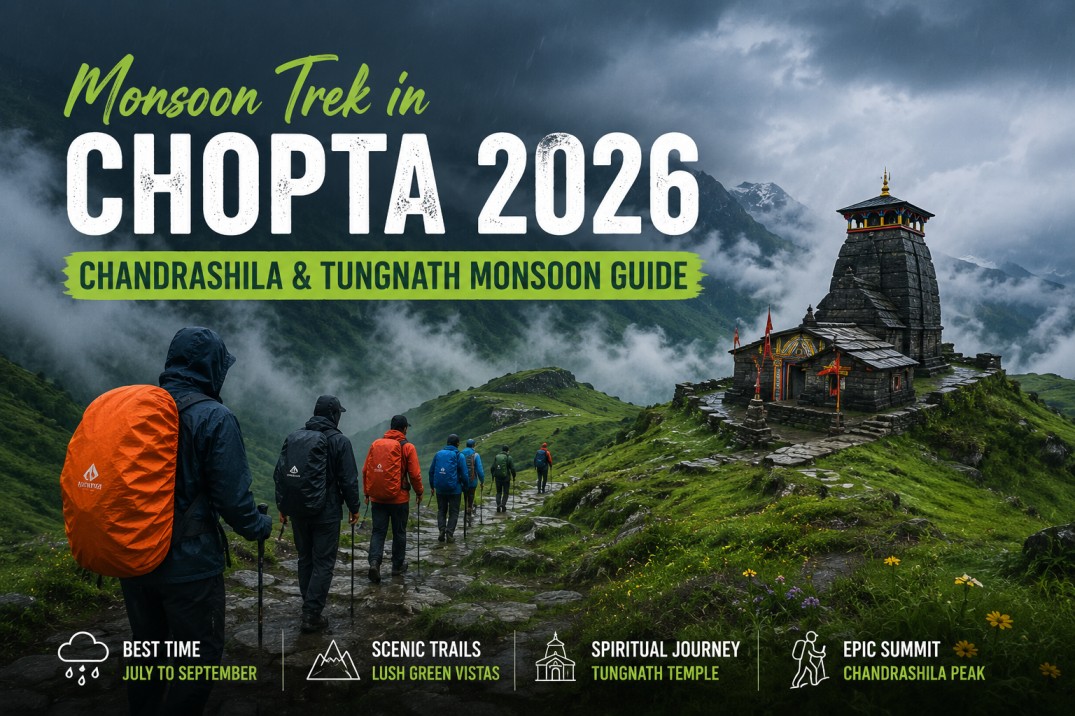
Monsoon Trek in Chopta 2026 Is Chandrashila & Tungnath Worth Visiting in the Rain?
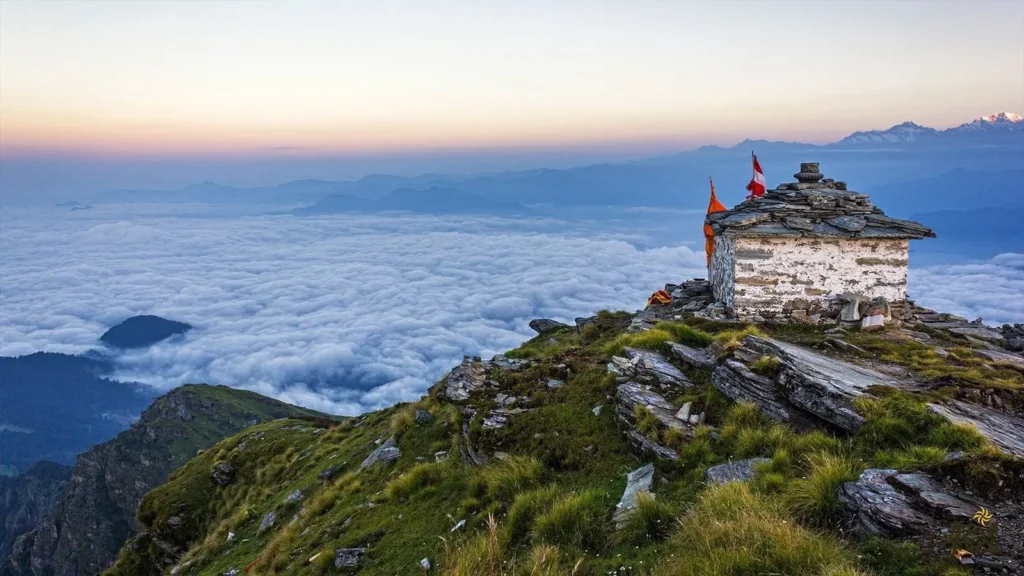
Imagine standing atop Chandrashila Peak at 13,123 feet, surrounded by a sea of clouds that stretch endlessly below you. The air is crisp, fresh, and filled with the earthy scent of rain-washed forests. The monsoon has transformed Chopta — the “Mini Switzerland of Uttarakhand” — into a lush emerald paradise where every leaf glistens, every waterfall roars, and the silence is broken only by the gentle patter of rain on rhododendron leaves.
But wait — is trekking to Tungnath Temple (the world’s highest Shiva temple) and Chandrashila Summit during monsoon actually safe? Will the trails be too slippery? Will the clouds hide those legendary Himalayan views of Chaukhamba, Nanda Devi, and Trishul?
This is the most comprehensive Monsoon Trek in Chopta 2026 guide you will find. Based on real trekker experiences, weather data, and expert safety advice, we will help you decide if a Chopta monsoon trek is right for you — and if yes, how to do it safely and memorably.
Quick Answer: Yes, the Chopta Tungnath Chandrashila trek CAN be done in monsoon (July-September), but with important precautions. The region receives moderate rainfall, trails can be slippery, and landslides are a risk on approach roads. However, for experienced trekkers who love solitude, misty landscapes, and lush greenery, monsoon Chopta offers a magical experience unlike any other season.
What is Chopta Monsoon Trek? (Understanding the Experience)
The Monsoon Trek in Chopta refers to trekking to Tungnath Temple (12,073 ft) and Chandrashila Summit (13,123 ft) during the monsoon months of July, August, and September. Unlike the popular spring (March-May) and autumn (September-November) seasons, monsoon trekking in Chopta is a niche experience that attracts adventure seekers who crave solitude, misty landscapes, and the raw beauty of rain-soaked Himalayas.
Located in the Kedarnath Wildlife Sanctuary in Rudraprayag district, Uttarakhand, Chopta sits at approximately 8,500 feet above sea level. The base is surrounded by dense oak, pine, and rhododendron forests that burst into vibrant life during monsoon rains. The meadows turn a brilliant green, wildflowers bloom in abundance, and the entire region feels like a secret garden hidden in the clouds.
Why Choose Monsoon Trek in Chopta?
1. Zero Crowds — The Ultimate Solitude While spring and autumn see hundreds of trekkers daily, monsoon Chopta is virtually empty. You might have the entire trail, the meadows, and even Tungnath Temple to yourself. For introverts and solitude seekers, this is paradise.
2. Lush Green Landscapes The monsoon transforms Chopta into a tropical paradise. The forests are at their densest, the meadows are carpeted in fresh grass, and every shade of green imaginable surrounds you. The famous rhododendron trees (buransh) are thick with leaves, creating a tunnel-like effect on the trail.
3. Waterfalls Everywhere Monsoon brings countless seasonal waterfalls to life. Streams that are dry in other seasons flow with full force, creating beautiful cascades along the trekking route. The sound of rushing water accompanies you throughout the trek.
4. Misty, Mystical Atmosphere If you love moody, atmospheric photography, monsoon Chopta is unmatched. The clouds roll through the valleys, the mist wraps around the peaks, and the play of light and shadow creates dramatic scenes that no filter can replicate.
5. Lower Prices & Easy Availability Since monsoon is off-season, trek operators offer significant discounts. Hotels and campsites are readily available, and you will not need to book months in advance.
Challenges of Monsoon Trek in Chopta
1. Slippery Trails The stone-paved trail to Tungnath becomes slippery with moss and wet rocks. The final 1.5 km climb to Chandrashila is particularly risky when wet.
2. Cloud Cover & Reduced Visibility The famous 360-degree views from Chandrashila are often hidden behind clouds during monsoon. You might trek all the way to the summit and see nothing but white fog. This is the biggest disappointment for monsoon trekkers.
3. Landslide Risk on Approach Roads The road from Rudraprayag to Chopta (via Ukhimath) passes through landslide-prone areas. Heavy rain can block roads for hours or even days.
4. Leeches in Forest Sections The lower forest sections, especially between Chopta and the initial trail, can have leeches during heavy rain. While not dangerous, they are unpleasant.
5. Tungnath Temple Closure Tungnath Temple is officially closed during winter (November-April) and monsoon maintenance may affect access. Always check temple status before planning.
Chopta Weather in Monsoon 2026 (Month-by-Month Breakdown)
Understanding the weather is crucial for planning your Chopta monsoon trek 2026. Here is a detailed month-by-month breakdown based on historical weather data and local patterns.
July 2026 — Peak Monsoon
| Weather Parameter | Details |
|---|---|
| Average Temperature | 15°C to 25°C during the day |
| Night Temperature | 8°C to 12°C |
| Rainfall | Heavy rainfall expected, approximately 200–300 mm |
| Humidity | 80% to 90% |
| Cloud Cover | Thick clouds remain throughout most of the day |
| Trail Conditions | Wet, muddy, and highly slippery trekking trails |
| Visibility | Low visibility; mountain views are often covered by clouds |
| Road Conditions | Increased risk of landslides and road blockages |
| Crowd Level | Very low tourist and trekker footfall |
| Trek Difficulty | Moderate to Difficult due to rain and slippery terrain |
What to Expect in July:
- Daily afternoon showers are almost guaranteed
- The trail is at its slipperiest
- Leeches are active in forest sections
- Road blockages are common
- Zero visibility of Himalayan peaks on most days
- Heavy mist and fog create a mystical atmosphere
Verdict: July is the riskiest month. Only experienced trekkers with proper gear should attempt. Beginners should avoid.
August 2026 — Mid Monsoon
| Weather Parameter | Details |
|---|---|
| Average Temperature | 14°C to 24°C during the day |
| Night Temperature | 7°C to 11°C |
| Rainfall | Moderate to heavy rainfall, approximately 150–250 mm |
| Humidity | 75% to 85% |
| Cloud Cover | Moderate to thick cloud cover |
| Trail Conditions | Mostly stable with some slippery sections and dry patches |
| Visibility | Moderate visibility with occasional clear mountain views |
| Road Conditions | Moderate risk of landslides in some areas |
| Crowd Level | Very low compared to peak trekking seasons |
| Trek Difficulty | Easy to Moderate |
What to Expect in August:
- Rainfall starts to decrease compared to July
- Morning skies sometimes clear before afternoon showers
- The landscape is at its greenest
- Wildflowers are in full bloom
- Better chances of peak views than July
- Still carry full rain gear
Verdict: August is better than July but still challenging. Good for experienced trekkers who love green landscapes.
September 2026 — Post-Monsoon (RECOMMENDED)
| Weather Parameter | Details |
|---|---|
| Average Temperature | 12°C to 22°C during the day |
| Night Temperature | 5°C to 10°C |
| Rainfall | Light to moderate rainfall, approximately 50–100 mm |
| Humidity | 60% to 75% |
| Cloud Cover | Thin to moderate cloud cover |
| Trail Conditions | Mostly dry and well-defined with occasional wet patches |
| Visibility | Good to excellent mountain visibility |
| Road Conditions | Roads are generally clear and accessible |
| Crowd Level | Low, offering a peaceful trekking experience |
| Trek Difficulty | Easy |
What to Expect in September:
- Monsoon starts retreating — rainfall decreases significantly
- Post-monsoon clarity begins — air is washed clean
- The best visibility of the monsoon season
- Landscapes are still lush and green from rains
- Comfortable temperatures for trekking
- Ideal for photography
- Best month for monsoon trekking in Chopta
Verdict: September is the BEST month for monsoon trekking in Chopta. You get the green landscapes WITH improving weather and visibility.
Chopta Monsoon Temperature Comparison Table
| Month | Rainfall |
|---|---|
| July | Heavy (200–300 mm) |
| August | Moderate (150–250 mm) |
| September | Light (50–100 mm) |
| October | Minimal |
Is Chopta Trek Safe in Monsoon? (Honest Safety Assessment)
This is the question every trekker asks before planning a monsoon trek in Chopta. Let us give you an honest, no-nonsense assessment.
The Real Risks
1. Landslides on Approach Roads The road from Rudraprayag to Chopta (approximately 65 km) winds through mountain terrain with several landslide-prone zones. During heavy rain, boulders and mud can block the road for hours. In 2023, the road was blocked for 2 days during peak monsoon.
Mitigation: Travel during daylight hours. Check road status with local authorities before departure. Keep 1-2 buffer days in your itinerary.
2. Slippery Trails & Fall Risk The trail from Chopta to Tungnath is a well-built stone path, but moss and algae grow rapidly during monsoon. The 5 km ascent has several sections where a slip could result in a serious fall. The final 1.5 km to Chandrashila is a steep scramble on rocks that becomes dangerous when wet.
Mitigation: Wear trekking shoes with EXCELLENT grip (not running shoes). Use trekking poles. Take it slow. Turn back if the trail feels unsafe.
3. Lightning Risk at High Altitude Chandrashila Peak is exposed and treeless. During thunderstorms, it becomes a lightning risk zone. The metal railing at the summit adds to the danger.
Mitigation: Check weather forecasts. Start early (4 AM) to reach the summit before afternoon thunderstorms. Descend immediately if you hear thunder.
4. Hypothermia Risk Getting wet at high altitude (above 12,000 ft) combined with wind can lead to rapid body heat loss. Temperatures at Chandrashila can drop to 5°C even in August when it rains.
Mitigation: Carry waterproof layers. Change into dry clothes immediately if you get soaked. Carry a thermal blanket.
5. Leeches The forest section near Chopta base can have leeches during heavy rain. They are not dangerous but can be unsettling for first-timers.
Mitigation: Wear full-length pants tucked into socks. Apply salt or leech repellent on shoes. Check your body after the trek.
Safety Verdict by Experience Level
| Trekker Type | Recommendation |
|---|---|
| First-Time Trekker | Avoid July & August |
| Experienced Trekker | September is Ideal |
| Solo Trekker | Never Trek Solo in July-August |
| Family with Kids | Avoid Monsoon Season |
| Photography Lovers | September Offers the Best Views |
Chopta vs Other Monsoon Treks in Uttarakhand
If you are specifically looking for a monsoon trek in Uttarakhand, how does Chopta compare to other options?
| Trek | Safety | Visibility | Crowd |
|---|---|---|---|
| Chopta Tungnath | Moderate | Poor-Good | Very Low |
| Valley of Flowers | Good | Moderate | High |
| Kedarkantha | Poor | Very Poor | Very Low |
| Har Ki Dun | Poor | Very Poor | Very Low |
| Dayara Bugyal | Moderate | Moderate | Very Low |
| Phulara Ridge | Poor | Very Poor | Very Low |
| Brahmatal | Poor | Very Poor | Very Low |
Key Insight: Chopta is actually one of the BETTER options for monsoon trekking in Uttarakhand because:
- The trail is paved (unlike muddy trails of Kedarkantha or Har Ki Dun)
- The altitude is moderate (not as extreme as higher treks)
- The road access is relatively good (compared to remote treks)
- You can turn back easily if weather worsens (unlike multi-day treks)
However, Valley of Flowers remains the undisputed king of monsoon treks in Uttarakhand. If your primary goal is monsoon trekking, consider Valley of Flowers first. Choose Chopta if you want a shorter, more accessible monsoon experience with spiritual significance.
Best Dates for Monsoon Trek in Chopta 2026
Based on weather patterns, road conditions, and trekker safety, here are our recommended dates:
AVOID (High Risk)
- July 1-31: Peak monsoon, heaviest rainfall, highest landslide risk
- August 1-15: Still heavy rain, frequent road blockages
CAUTION (Moderate Risk)
- August 16-31: Rain starts decreasing, but still unpredictable
RECOMMENDED (Low Risk, High Reward)
- September 1-15: Post-monsoon transition, lush landscapes, improving visibility
- September 16-30: Best monsoon window — clear skies, green meadows, minimal rain
RECOMMENDED (Low Risk, High Reward)
October 1-15: Post-monsoon perfection — crystal clear views, golden landscapes, dry trails
Pro Tips for Choosing Dates:
Check the 7-day weather forecast before booking — monsoon can be unpredictable
Avoid weekends in July-August — even with low crowds, road blockages can strand you
Plan for 1 extra buffer day — monsoon travel often faces delays
September 15-30 is the sweet spot — you get monsoon greenery without monsoon risks