
Osla Village: History, Architecture & Local Traditions on the Har Ki Dun Trail
Most people remember Har Ki Dun for its valley and snow peaks. Ask anyone who has done the trek a few months later, though, and many will talk about Osla. It is the last village on the route, a cluster of wooden houses perched on a mountain slope, with a temple at its centre and a way of life that has changed slowly.
This guide explains what Osla is, where its traditions come from, how its houses are built and how to visit respectfully. If you are planning the trek itself, you can read the route details on our Har Ki Dun Trek page and check dates and inclusions on the Har Ki Dun Trek Package page.
Quick Facts About Osla Village
Located along the Har Ki Dun trekking route in Uttarkashi, Osla is a traditional Himalayan village known for its hillside setting, wood-and-stone architecture and local cultural heritage.
| Detail | Information |
|---|---|
| Location | Har Ki Dun Valley region, Govind Pashu Vihar area, Uttarkashi, Uttarakhand |
| Role on the Trek | One of the last permanent villages encountered on the Har Ki Dun route |
| Approx. Altitude | 2,600–2,800 m above sea level |
| Setting | Hillside terraces overlooking the Supin River |
| Main Landmark | The village temple, locally known as Someshwar Temple |
| Main Building Materials | Traditional wood and stone construction |
| Regional Identity | Part of Ranwai Ghati, also referred to as Parvat Ghati |
| Facilities Beyond Osla | Facilities are limited, with no regular shops or eateries along the onward trail to the valley. Carry essential supplies and confirm arrangements with your trek operator. |
Where Is Osla and Why Does It Matter?
Osla sits partway between Seema and the valley of Har Ki Dun. On the trail, it marks a change of mood: after this point, the houses disappear and the route becomes forest, meadow and river.
Geographically, the whole Har Ki Dun valley is known locally as Ranwai Ghati or Parvat Ghati. It lies close to the Uttarakhand-Himachal border and near the Jaunsar-Bawar region, so its culture borrows from several neighbouring traditions. That is why dress, music, wood carving and festival customs here can feel familiar to people who know Himachali or Jaunsari culture, yet remain distinctly local.
For a trekker, Osla matters for three reasons: it shows how people live at altitude, it contains one of the most photographed temples on the route, and it is often a natural stop between Seema and the valley.
A Brief History of Osla Village
There is no single written history of Osla, so it is best to describe it honestly: what is documented, what is oral tradition and what is uncertain.
What we can say with confidence
- The village has been a farming and herding settlement for generations, relying on terraced fields and seasonal movement of animals.
- Its wooden houses and temple follow regional building traditions that are centuries old.
- The Har Ki Dun valley is culturally linked to the wider Tons valley and the Ranwai region.
What belongs to oral tradition
- Local stories connect the valley to the Mahabharata. One widely told version says the Pandavas travelled towards Swargarohini (“ascent to heaven”) peak, which stands in front of Har Ki Dun, on their final journey.
- These stories are told as living tradition. They are meaningful, but they are not archaeological evidence.
What is disputed
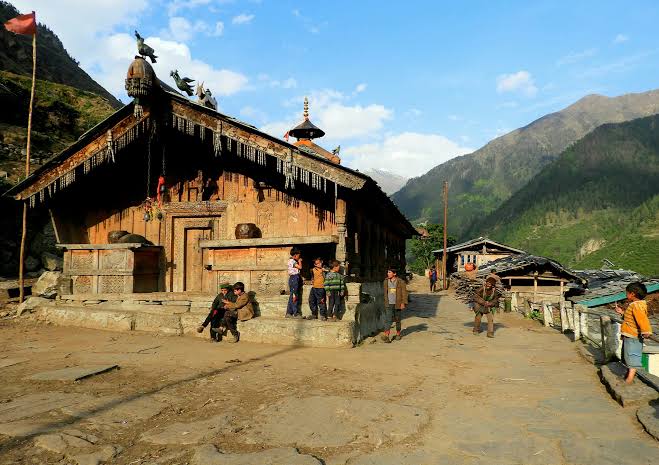
Some websites describe the temple in Osla as a Duryodhana temple. Other sources, including village-focused writers, state that locals dedicate it to Someshwar, a form of Shiva, and disagree with the Duryodhana claim. In this guide, we use the name used by the community, Someshwar, and treat the Duryodhana link as a story you may hear from outsiders rather than a settled fact.
Osla Architecture: How the Houses and Temple Are Built
Wood and stone, working together
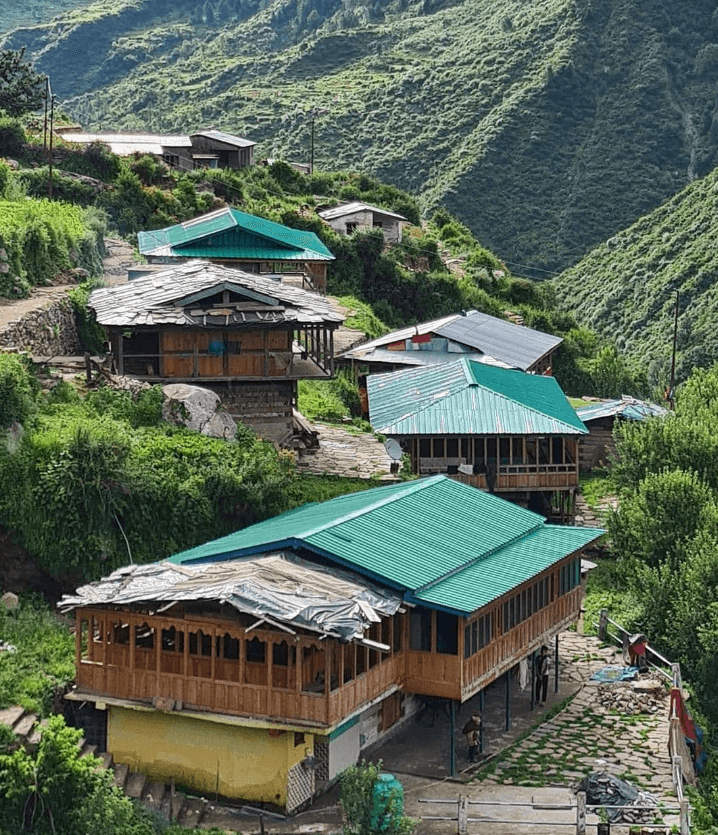
Houses in Osla and neighbouring villages are built from locally available timber and stone. The typical approach uses stone for the base and wooden beams for the structure above. Several writers who have documented the region describe walls made from alternating layers of stone and wood, a method that also appears in the larger temples of the Tons valley.
Why this style works at altitude
- Insulation: timber and stone hold heat better than thin modern materials, which helps in sub-zero winters.
- Flexibility: wood handles the movement of hill slopes and the shaking of earthquakes better than rigid concrete alone.
- Availability: the materials come from the surrounding forest and hillside, which reduces transport needs in a place with no motor road.
Hillside placement
Osla is built on a steep slope, and many houses seem to hang off the mountain, stacked in terraces. Courtyards are small, lanes are narrow and the houses face the valley for light and warmth.
Carvings and decoration
In villages of this region, you will often see carved doors, wooden pillars and decorative panels with floral, leaf and animal motifs. Not every house in Osla is richly carved, but you can find fine examples on older buildings.
The village temple
The temple at the village centre is a three-chambered wooden structure, decorated with bells and prayer flags. It follows the Himalayan wooden-temple tradition seen across the Tons valley, where most older temples are dedicated to Someshwar and are built with wooden beams on a stone platform.
Local Traditions and Community Life
Farming and the seasonal calendar
Life in Osla follows the seasons. Terraced fields produce crops during the warmer months, and families adjust their routines to the cold winters. Grazing and herding are also part of the wider valley economy.
Village deity and community worship
In this part of Garhwal, the village deity is more than a religious figure. It is a family and community identity. Festivals, fairs and rituals gather relatives who live in other villages and return for the occasion.
Festivals
Writers who have documented the valley describe two kinds of village fairs (melas) in the region. Two details are commonly reported:
- A festival around August that lasts several days, with rituals, music and traditional Garhwali dance.
- Another gathering in late August, in which some villagers act out the roles of the Pandavas in a form of folk performance.
Exact dates vary each year and are set by the community, so if you want to see a festival, confirm timing in advance and treat it as a community event, not a tourist show.
Dress, music and craft
Garhwali dress, folk songs, drums and weaving are part of daily and festive life. The valley’s position near Himachal and Jaunsar-Bawar means influences from all three cultures can be seen.
Responsible Visiting: How to Be a Good Guest in Osla
These small habits matter more than any itinerary:
- Ask before photographing people or homes. A smile and a question go a long way.
- Dress modestly near the temple, and follow the guidance of your guide about where you can and cannot go.
- Do not touch or enter temple areas unless invited.
- Carry out all your waste. There is no waste collection beyond the village.
- Buy local where you can, such as simple snacks or tea, but do not expect shops; supplies are limited.
- Keep noise down. Avoid loud music or drones.
- Respect festivals. If you arrive during a village gathering, observe quietly.
Visiting Osla During the Har Ki Dun Trek
Osla is usually crossed on the way to Har Ki Dun and again on the way back, and some itineraries camp at or near it.
- Best months: April–June and September–November, when weather is more stable.
- Time to allow: at least an hour to look around, longer if you want to talk with locals or take photographs.
- What to carry: snacks, water and a small amount of cash for any local purchases, because there are no regular shops beyond this point.
- Check the plan: campsites vary by operator and season, so ask where you will stay.
You can see how Osla fits into the full route on the Har Ki Dun Trek page. For a ready-made Delhi to Delhi plan with transport, permits and stays, view the Har Ki Dun Trek Package.
Osla and the Other Villages of the Valley
Osla is one of the best-known villages on the Har Ki Dun trek, but it is part of a wider chain of settlements along the Supin River. Each village offers a different glimpse into the region's traditional homes, terraced fields and mountain way of life.
| Village | What You Notice |
|---|---|
| Sankri / Saur | A common base for the trek, with traditional wooden houses and examples of local wood carving. |
| Taluka | The road-accessible starting point for the traditional walking route towards the valley. |
| Gangad | Terraced fields and wooden houses set beside the river landscape. |
| Seema | A settlement opposite Osla, across the Supin River. |
| Osla | Known for its village temple, traditional hillside houses and distinctive cultural heritage. |
Why these villages matter: Walking through the settlements in sequence gives you a better sense of how people live along the valley, adapt to the mountain environment and maintain their traditional architecture and local customs.
Frequently Asked Questions
What is Osla village known for?
It is the last village on the Har Ki Dun trek, known for its wooden houses, hillside setting and central temple.
Is the Osla temple a Duryodhana temple?
Some sources say so, while local residents and village-focused writers describe it as a Someshwar (Shiva) temple. Both claims appear online, so it is best to follow the name used by the community.
What is the architecture of Osla like?
Houses and the temple use wood and stone, with wooden beams, carved details and terraced placement on the slope.
Are there festivals in Osla?
Yes. Reports describe a multi-day festival around August and a Pandava-themed folk performance in late August. Dates vary, so check ahead.
Can tourists stay in Osla?
It depends on the itinerary and local arrangements. Camping near the village is common on some routes.
Are there shops after Osla?
Very few, so carry the supplies you need.
What is the altitude of Osla?
Roughly 2,600–2,800 m, depending on the source and spot.
How do I include Osla in my trip?
Osla is on the standard Har Ki Dun route. See the Har Ki Dun Trek page or the Har Ki Dun Trek Package.