Deoriatal trek: complete guide
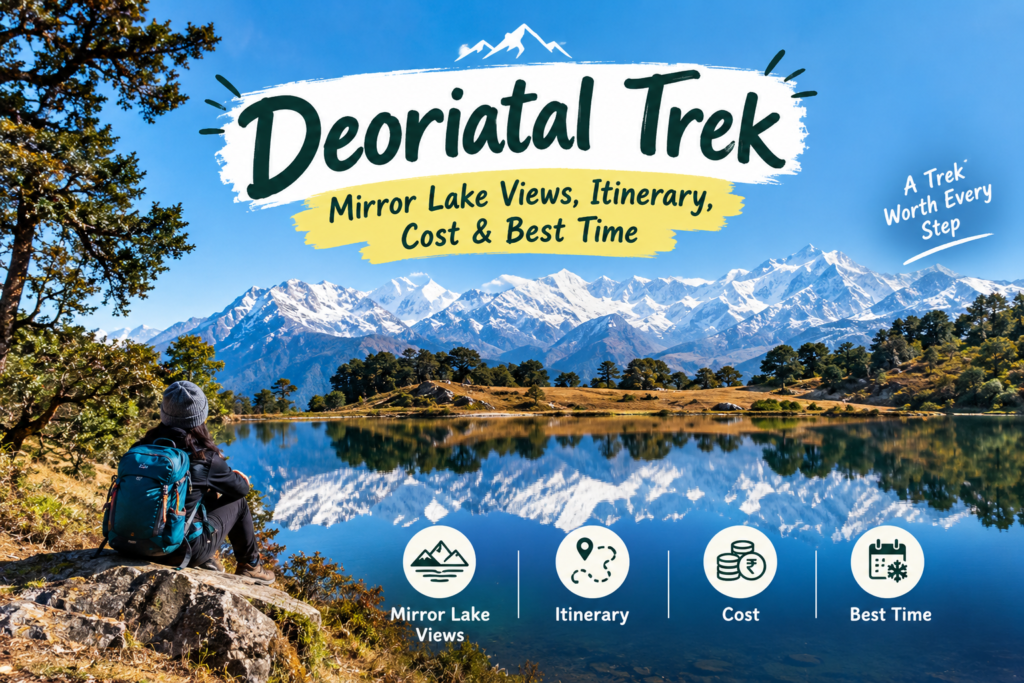
Deoriatal (also written Deoria Tal) is a small Himalayan lake at about 2,400 m in Rudraprayag district, Uttarakhand, reached by a forest trail from Sari village. On clear mornings the Chaukhamba peaks reflect in its still water, which is why trekkers call it the mirror lake. The lake lies inside the Kedarnath Wildlife Sanctuary. The trek is easy enough for first-timers and pairs well with Rohini Bugyal, Chopta, Tungnath and Chandrashila.
If you want the entire journey arranged, Trektonic Adventures offers the Deoriatal trek as a Rishikesh-to-Rishikesh trip with Rohini Bugyal, Tungnath and Chandrashila. Explore the detailed Deoriatal Trek overview or visit the Deoriatal Trek Package page to check package inclusions and dates. This guide covers the key details you should understand before booking.
The Deoriatal Trek is an easy-to-moderate Himalayan trek reaching approximately 3,700 m (12,083 ft) at Chandrashila. The lake itself sits at about 2,400 m (7,810 ft). The route is roughly 32 km on foot, while a Rishikesh-to-Rishikesh journey takes around 6 days and 5 nights, including four days on the trail.
Best time to visit: : March to June and September to December are the commonly recommended trekking windows for the Deoriatal Trek.
Deoriatal Trek Overview
Discover the essential details of the Deoriatal Trek, from its forest trails and mirror lake to its altitude, difficulty and best seasons to visit.
Trek Name
Deoriatal Trek
Meaning of Name
“Lake of the Gods”; the lake is also linked to Mahabharata folklore.
Location
Kedarnath Wildlife Sanctuary, Rudraprayag, Uttarakhand
Trip Format
Rishikesh to Rishikesh · 6 Days / 5 Nights
Base Village
Sari Village · Approx. 2,000 m
Highest Point
Chandrashila · Approx. 3,700 m / 1,083 ft
Trek Distance
Approx. 4.1 km round trip, depending on the roadhead and route
Difficulty
Easy to Moderate
Altitude Sickness Risk
Low to moderate, but altitude-related illness is still possible
Best Seasons
March–June and September–December
Ideal Age
Fit trekkers aged approximately 10–60 years, subject to individual fitness, health, route conditions and appropriate supervision for younger trekkers.
Planning tip: Trek distance, walking hours and roadhead can vary by itinerary and local conditions. Prepare for changing mountain weather and follow your trek leader’s guidance throughout the journey.
What Makes Deoriatal Different From Other Himalayan Treks?
Many Himalayan treks ask for days of effort before the big view. Deoriatal is different because a short forest walk brings you to a sacred mountain lake, with meadows and snow peaks waiting beyond it.
Living Himalayan Villages
(Culture & Heritage) Start from Sari, a quiet Garhwali village of terraced fields and traditional houses, and pass a small local temple at the trail gate. The nearby town of Ukhimath is the winter seat of Kedarnath and Madhmaheshwar.
A Mirror Lake, Not a Summit
(Scenic Landscapes) The trail opens at a calm lake where, on clear windless mornings, the Chaukhamba peaks reflect in the water. The landscape is the destination.
Peaceful Mountain Trails
(Nature & Tranquillity) Walk through oak and rhododendron forest and the Ropini Bugyal meadow inside a wildlife sanctuary. Enjoy birdsong, quiet camps and the calm of the lake.
More to Explore Beyond the Lake
(Optional Extensions) Extend your adventure through Rohini Bugyal to Syalmi and Baniya Kund, then climb to Tungnath temple and Chandrashila summit when conditions and your itinerary allow.
The Journey Is the Highlight
The Journey Is the Highlight. Deoriatal brings together village life, forest trails, a mirror lake and the option to climb to Chandrashila. It is an ideal choice for trekkers who want to experience the mountains at a slower, more immersive pace.
Deoriatal Trek Route in Simple Words
The route climbs from a roadside village through forest to a lake. Then follows meadows and ridges towards Chopta, Tungnath and Chandrashila.
Sari
Sari is the main base village for the trek. Where trekkers arrive by road from Rishikesh and complete registration and health screening.
Sari Trail Gate
A short walk inside the village, past a small local temple, brings you to the trail gate. From here the stone-pitched path climbs through forest.
Ropini Bugyal
About 20 to 30 minutes uphill you reach Ropini Bugyal, with the first views of Sari below. The trail then continues through oak and rhododendron forest.
Deoriatal Lake
At about 2,400 m, the lake offers a campsite, forest department cottages and the Chaukhamba reflection at sunrise.
Rohini Bugyal, Syalmi and Baniya Kund
The trail rises to Rohini Bugyal at about 9,020 ft, drops to Syalmi at 7,600 ft, then climbs to Baniya Kund at 8,520 ft.
Tungnath and Chandrashila
The summit day climbs via Tungnath temple to Chandrashila at 12,083 ft, with panoramic views of the Himalayan range.
Route note: The exact overnight stops can vary by itinerary, weather and local trail conditions. Confirm the planned camping locations with your trek operator before departure.
Culture and Legends You Will Encounter
Deoriatal is more than a Himalayan trekking destination. Its sacred lake, village temples and mountain legends offer a glimpse into the cultural heritage of the Garhwal Himalayas.
The Lake and the Yaksha Prashna
Some local accounts say Deoriatal is where a Yaksha questioned the Pandava Yudhishthira, an episode from the Mahabharata known as Yaksha Prashna. Traditions and interpretations vary, so these stories are best understood as part of the region’s local folklore.
Sari Village and Ukhimath
Sari is a quiet Garhwali village of terraced fields and traditional houses. In winter, the deities of Kedarnath and Madhmaheshwar are worshipped at the Omkareshwar temple in nearby Ukhimath, a worthwhile stop on the drive.
The Meaning of the Name “Deoriatal”
Deoria Tal is commonly interpreted as the “Lake of the Gods,” a name that reflects the sacred character often associated with this Himalayan landscape. The meaning is not universally explained in just one way.
Respect local traditions: When visiting Sari and its temple, follow local customs, ask permission before photographing people or sacred spaces and treat stories shared by residents with respect.
Deoriatal Trek Difficulty: An Honest View
Deoriatal Trek is generally considered an easy-to-moderate Himalayan trek. You do not need technical climbing skills, but consecutive walking days, uneven trails and changing mountain weather require preparation.
Easy to ModerateWhat Makes the Trek Challenging?
Understand the main factors before planning your journey.
Distance & Stamina
Expect several days of walking on mountain trails. A commonly followed itinerary covers around 4.1 km over five trekking days, though the total varies with the route and overnight stops.
Steep Trail Sections
Some sections involve a noticeable climb, including parts of the trail around Sari. Uneven ground and descents can also tire your legs, especially towards the end of the day.
Altitude
The trail reaches approximately 3,700 metres above sea level. Altitude-related illness is possible even on a non-technical trek. Ascend gradually and take symptoms seriously.
Weather Conditions
Rain can make trails slippery during the monsoon. Nights may be cold and snow is possible in colder parts of the trekking season. Carry suitable layers and rain protection.
Mobile Network
Mobile connectivity becomes unreliable or unavailable beyond Sankri, depending on the network and location. Inform family of your itinerary and do not depend on a phone signal for emergencies.
Your Four-Week Fitness Plan
Build your stamina gradually before the trek. Adjust the routine to your current fitness level and allow time for recovery.
Week 1: Build a Walking Habit
Walk briskly or jog gently for around 30 minutes, five days a week, at a pace that suits your current fitness.
Week 2: Strengthen Your Legs
Add stair climbing and bodyweight squats on three days of the week. Focus on controlled movements and good technique.
Week 3: Walk with a Backpack
Increase your walking time to 45–60 minutes and practise with a light 4–5 kg backpack on suitable terrain.
Week 4: Practise a Longer Walk
Complete one comfortable 2–3 hour walk on suitable terrain. Practise steady pacing and relaxed breathing, and avoid overtraining before departure.
Safety first: Fitness cannot eliminate altitude sickness. If you develop a headache with nausea, dizziness or unusual fatigue at altitude, stop ascending and inform your trek leader. Worsening symptoms, confusion, breathlessness at rest or difficulty walking require urgent medical assessment and descent.
Best Time for the Deoriatal Trek
Deoriatal changes with every season, from snow-covered trails in winter to blooming rhododendrons in spring and clear autumn skies. Choosing the right month depends on your experience, weather conditions and the kind of mountain scenery you want to enjoy.
Late Winter & Early Spring
Expect cold temperatures and lingering snow at higher points. Conditions can be demanding after fresh snowfall. Good for prepared trekkers.
Experienced trekkersSpring & Early Summer
The landscape turns greener, with rhododendrons and wildflowers along the trail. Days are often pleasant, though nights remain cool. Excellent season.
Excellent seasonMonsoon Season
Heavy rainfall makes stone steps slippery and raises the risk of landslides and road disruptions. Generally avoid.
Generally avoidPost-Monsoon Transition
The forest often retains its fresh greenery while rainfall decreases. Trail and road conditions can still vary. Good season.
Good seasonAutumn in the Himalayas
Clear skies, crisp air and sharp mountain views make autumn a favourite period. Temperatures drop considerably after sunset. Excellent season.
Excellent seasonDeep Winter
Snow on the trail and meadows, and freezing nights. This period requires winter equipment, experience and confirmation that the route is safe and accessible. Specialised planning.
Specialised planningWhen Should First-Time Trekkers Visit?
For your first Himalayan trekking experience, consider May to June or late September to October. These periods often offer a good balance of scenery and trekking conditions, although actual weather can vary each year.
Want to Choose the Right Month?
Read our detailed guide to seasonal weather, trail conditions and the ideal time to plan your journey.
Explore the Best Time for Deoriatal TrekPermits and Rules You Should Know
Deoriatal lies within the Kedarnath Wildlife Sanctuary of Uttarakhand. Before starting your trek, understand the permit requirements and follow responsible trekking practices to help protect the Himalayan environment and local communities.
Forest Department Permit
The trek passes through the Kedarnath Wildlife Sanctuary, where applicable forest permissions are required. Trektonic Adventures arranges the permit as part of the trek service described for your booking
Carry a Valid Photo ID
Keep a valid government-issued photo ID with you. Carry an original document and a photocopy, and follow the current instructions provided by your trek operator or forest officials.
Carry Your Waste Back
Take back plastic bottles, wrappers, food packaging and other waste. Never leave rubbish at campsites, beside rivers or along village trails. Use designated waste collection facilities where available.
Respect Wildlife and Villages
Do not feed, chase or disturb wild animals. Keep a respectful distance from wildlife, avoid loud music in village areas and respect local customs, homes and sacred places.
Camp Only at Permitted Locations
Stay at designated or authorised campsites and follow the directions of your trek leader and forest staff. Do not set up tents in restricted areas or light fires where they are prohibited.
Before departure: Permit procedures, fees, ID requirements and campsite restrictions can change. Confirm the latest rules with Trektonic Adventures and the relevant forest authorities before your trek.
Common Mistakes First-Time Trekkers Make
Deoriatal is an achievable Himalayan adventure for many beginners, but the right preparation makes a real difference. Avoid these common mistakes to enjoy a safer and more comfortable trek.
Skipping Fitness Practice
Even an easy-to-moderate trek can feel difficult when you are not used to walking for several hours a day. Build basic stamina before departure with regular walks, stairs and simple leg strengthening exercises.
Carrying Too Much Weight
An overloaded backpack can make uphill sections harder and put extra strain on your shoulders, knees and back. Pack only the essentials and check whether luggage offloading is available through your trek operator.
Wearing Brand-New Trekking Shoes
New shoes can cause blisters, rubbing and discomfort on long mountain walks. Wear your trekking shoes on several shorter walks before the trip to check the fit, grip and comfort.
Ignoring Early Altitude Symptoms
Headache, nausea, dizziness or unusual fatigue can be signs of altitude-related illness. Tell your trek leader promptly rather than hiding symptoms or pushing yourself to continue.
Assuming Your Mobile Network Will Work
Mobile connectivity may become unreliable or unavailable beyond Sari. Do not depend on calls or mobile data for communication during the trek.
Prepare Well, Trek Responsibly
Train beforehand, follow local guidance, respect your body’s limits and listen to your trek leader. Good preparation helps you focus on the villages, forests and mountain scenery of Deoriatal Trek.
Who Is the Deoriatal Trek Suitable For?
Deoriatal is ideal for travellers who enjoy scenic mountain trails, forests, meadows and a sacred lake. You do not need to be a mountaineer, but basic fitness and preparation are important.
Beginners with Basic Fitness
Suitable for beginners who can walk for several hours, handle uneven trails and prepare with regular walking or simple fitness exercises before departure.
Friends, Couples and Small Groups
A rewarding choice for friends, couples and small groups who want to share mountain walks, riverside trails, village stays and memorable evenings in the Himalayas.
Photographers and Nature Lovers
Great for travellers interested in mountain scenery, forest landscapes, traditional wooden houses, river valleys and changing Himalayan light throughout the journey.
Lake-and-Meadow Explorers
Ideal for people who prefer walking through forest and open meadows to a calm lake, then continuing to Tungnath and Chandrashila.
Travellers Looking for an Arranged Trip from Rishikesh
A good option for travellers who prefer organised transport, accommodation, trek logistics and local support. Confirm whether your chosen package includes Rishikesh transfers as inclusions vary by itinerary.
Planning Your Deoriatal Trek?
Discover the route, itinerary, major highlights and other practical details before choosing your trekking dates.
Deoriatal Trek Highlights
- Sunrise reflection of the Chaukhamba peaks in Deoriatal Lake
- A trail through oak and rhododendron forest and the Ropini Bugyal meadow
- Time at the lake to explore, relax and watch the sunset and sunrise
- Lakeside camping at Deoriatal and meadow camping at Syalmi and Baniya Kund
- Summit day to Tungnath temple and Chandrashila (12,083 ft) with panoramic Himalayan views
- Guesthouse stay at Sari before and after the trek