
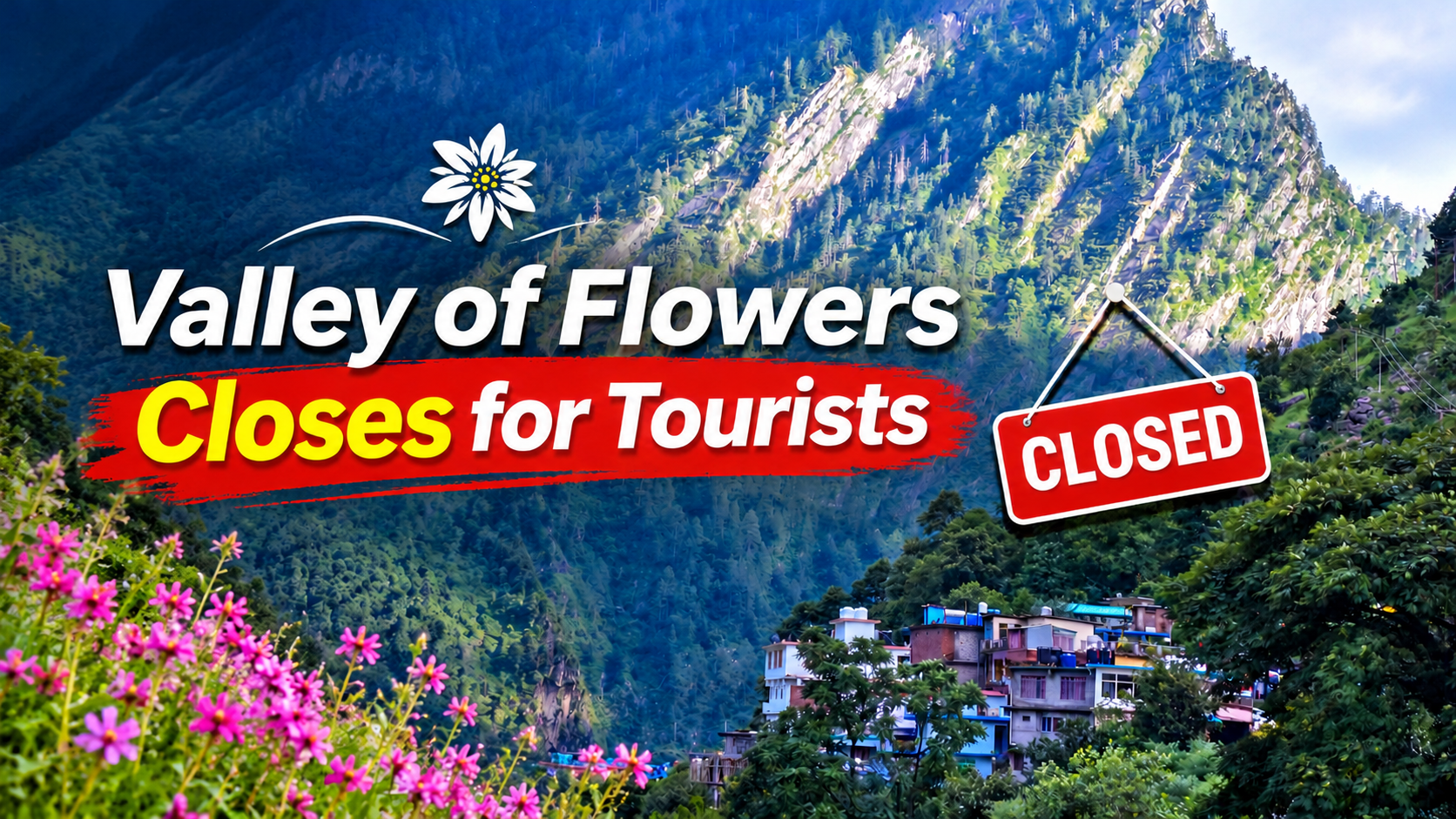
The Valley of Flowers Is Now Closed to Tourists
The Valley of Flowers, a UNESCO World Heritage Site in Chamoli district, Uttarakhand, has closed to tourists for the 2026 season. The valley closes every year as winter and snowfall approach. The valley is open from June 1 to October 31 each year, and a forest department team visits it from time to time while it is closed. etvbharat
This year, the park reopened on June 1 and remained open until October 31, giving visitors a five-month window to explore the valley. If you made it this year, you saw one of the most beautiful sights in the Indian Himalayas. If you missed it, there is plenty of time to plan for 2027.
Why Does the Valley of Flowers Close Every Year?
The valley sits at about 3,600 metres in the Bhyundar valley. It cannot stay open in winter for these reasons:
- Heavy snowfall: From November the whole valley is covered in snow, and the trails disappear.
- Safety: Avalanche risk and extreme cold make trekking dangerous.
- Conservation: The valley is part of the Nanda Devi Biosphere Reserve. The long winter closure gives its fragile alpine plants and wildlife a break from human visitors.
- Flowers have finished: By late October most blooms are gone, and the meadows turn golden brown before the snow arrives.
When Does the Valley of Flowers Open Again?
The valley normally opens on June 1 and closes on October 31. This year, Forest Range Officer Chetna Kandpal said it would stay open to visitors until October 31. In some years the valley has been closed early or kept shut for longer because of heavy rain, landslides or damaged bridges. Always check the latest status with the Nanda Devi National Park office or the forest department before booking.
Best Time to Visit the Valley of Flowers
| Period | What to expect |
|---|---|
| June | Early season, patches of snow, fewer flowers |
| Early July | Monsoon arrives, flowers start to open |
| Mid-July to mid-August | Peak blooming period, with the most colour |
| September | Fewer crowds, clear skies, and different flowers in bloom |
| October | Autumn colours, very cold, season ends |
For the best flowers, plan your trip between mid-July and the end of August. For a quieter and clearer trip, September is a good choice.
About the Valley of Flowers
- Location: Chamoli district, Uttarakhand, inside the Nanda Devi Biosphere Reserve
- Altitude: About 3,600 metres above sea level
- Area: About 87 sq km
- UNESCO status: Declared a UNESCO World Natural Heritage Site in 2005 etvbharat
- Flora: More than 300 species of flowers and several rare varieties of flora, including Brahma Kamal, blue poppy, cobra lily and primulas newsonair
- Fauna: Himalayan black bear, musk deer, blue sheep, snow leopard (rarely seen) and many Himalayan birds
- History: Said to have been discovered in 1931 by three British mountaineers
How to Reach the Valley of Flowers
- Reach Haridwar or Rishikesh by train or road. Dehradun’s Jolly Grant Airport is the nearest airport.
- Drive to Joshimath, then Govindghat. This is a long mountain drive, usually broken with a night in Rishikesh or Joshimath.
- Trek from Govindghat to Ghangaria (about 13 km). This is the base camp for both the Valley of Flowers and Hemkund Sahib.
- Trek from Ghangaria into the valley. The round trip from Ghangaria is around 8 to 10 km, and the difficulty is considered moderate.
Most trekkers need 5 to 6 days for the whole trip, including travel.
Tips for Planning Your 2027 Trip
- Plan early. Rooms in Ghangaria are limited and fill up quickly in July and August.
- Pack for rain. Bring a good rain jacket, waterproof trekking shoes, a poncho and a quick-dry change of clothes.
- Take it slowly. Acclimatise and drink plenty of water to avoid altitude problems.
- Respect the rules. Stay on marked paths, do not pick flowers, and carry all your waste back down.
- Keep a flexible schedule. Monsoon landslides can delay travel, so add a spare day if you can.
- Combine with Hemkund Sahib. Many trekkers visit the Sikh pilgrimage site from the same base camp.
Plan Your Valley of Flowers Trek with Trektonic Adventures
The valley is closed, but the best time to plan is now. Early planning gives you better choices for dates, stays and travel. Trektonic Adventures can help you plan a safe, well-organised Himalayan trip, so you can enjoy the flowers without worrying about the logistics. Visit trektonicadventures.com to see our treks and get in touch for 2027 dates.