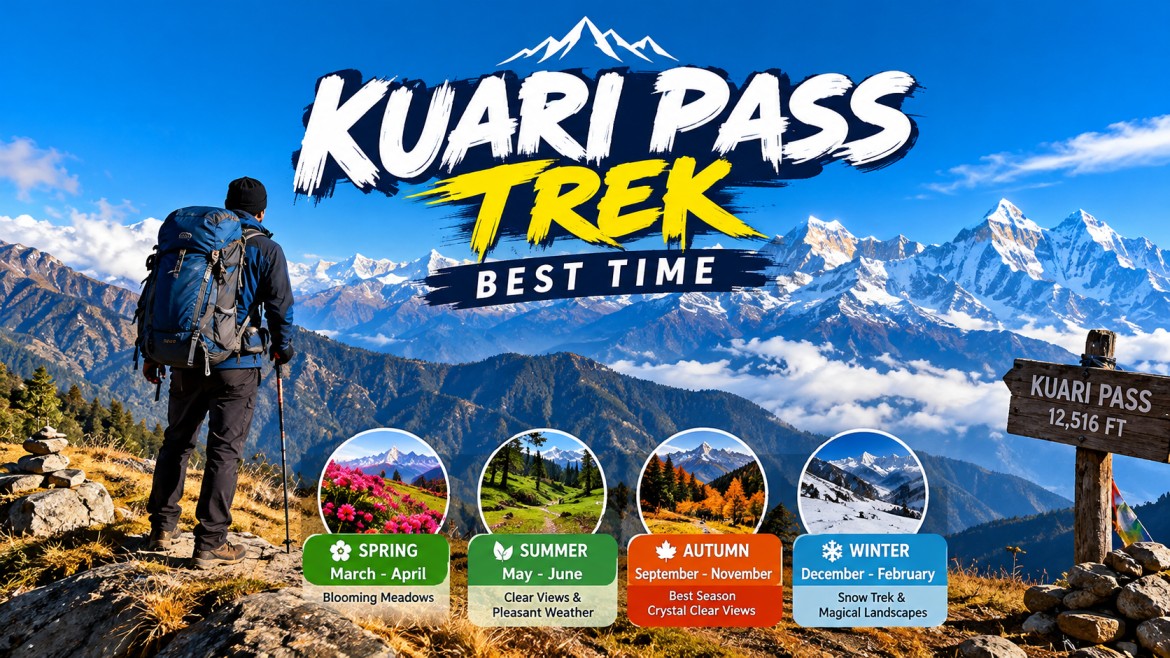
The best time for the Kuari Pass Trek is March to June and September to November for clear mountain views, and December to February if you want a snow trek. The monsoon months of July and August are best avoided because of rain, slippery trails and landslide risk on the Joshimath road.
Kuari Pass sits at about 12,516 ft (3,815 m) in the Chamoli district of Uttarakhand, on the old Lord Curzon Trail. Because the trek passes through forests, open meadows like Gorson Bugyal and high ridges, the experience changes completely from season to season. This guide explains what each season looks like, so you can pick the right month for your fitness, comfort and goals.
Kuari Pass Trek Best Time at a Glance
Compare the seasons, trail conditions and mountain views to choose a suitable time for your Kuari Pass Trek.
| Season | Months | Trail Condition | Views | Suitable For |
|---|---|---|---|---|
| Winter | Dec – Feb | Snow-covered, icy patches, very cold | Excellent on clear days | Snow lovers, fit beginners with guidance |
| Spring | Mar – May | Melting snow at the top, green forests | Very good, with rhododendron colour | First-timers, photographers |
| Summer | June | Dry, comfortable days, cool nights | Good, but haze is possible | Families, beginners |
| Monsoon | Jul – Aug | Wet, slippery, landslide risk | Often clouded | Not recommended |
| Autumn | Sep – Nov | Dry trail, stable weather | Best clarity of peaks | Not specified in the supplied table |
Kuari Pass in Winter (December to February)
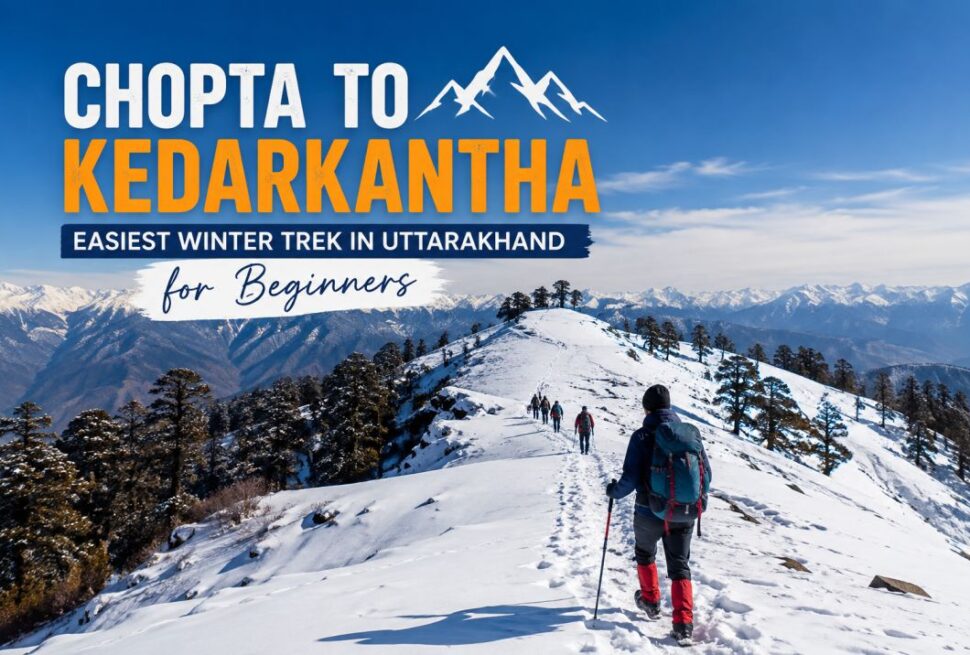
Kuari Pass is one of the most popular snow treks in Uttarakhand, and winter is when it earns that reputation. The trail, meadows and ridges get covered in snow, and the Garhwal Himalayas look sharp against clear skies.
What to expect
- Snow on the upper sections, with icy patches in the morning
- Sub-zero temperatures at higher camps, especially at night
- Shorter daylight, so walking days start early
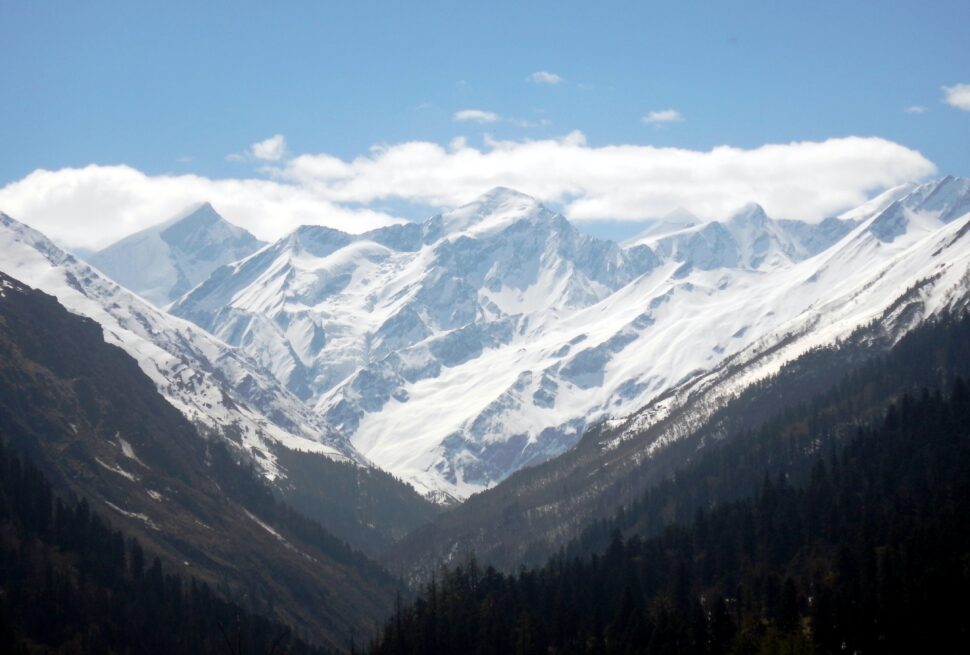
- Stunning views of Nanda Devi, Dronagiri, Chaukhamba and the Hathi-Ghoda group on clear days
Who should go: Trekkers who are physically fit, comfortable in the cold and willing to carry proper winter gear. Beginners can attempt it with an experienced guide, but should not underestimate the cold.
Tip: Carry gaiters, a down jacket, thermal layers and waterproof gloves. Trekking shoes with good grip matter more in winter than in any other season.
Kuari Pass in Spring (March to May)
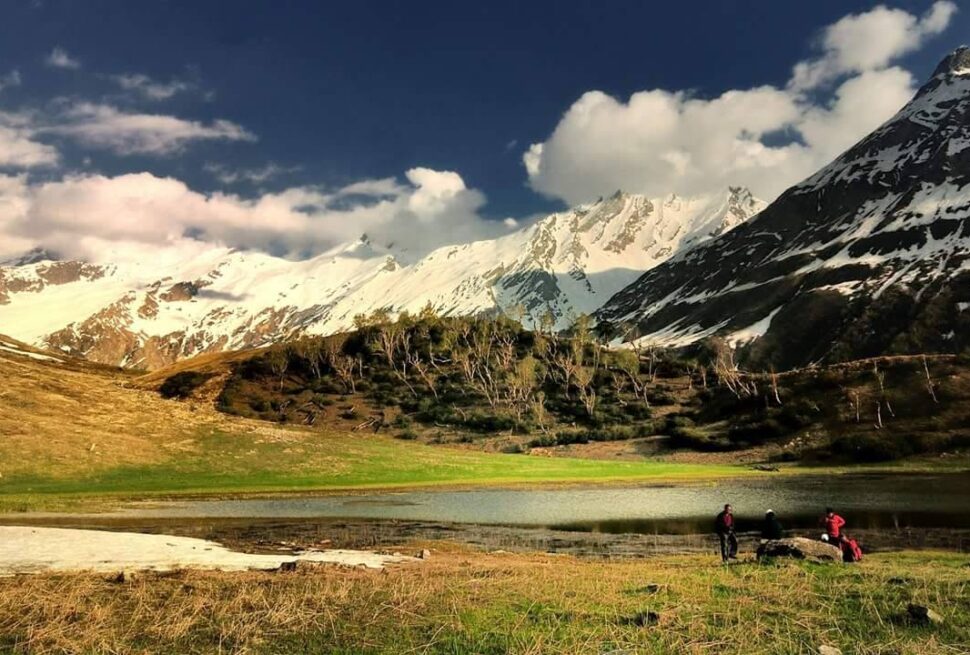
Spring is the best all-round window for most people. Snow starts melting from the lower sections, forests turn green, and rhododendrons add colour to the trail in suitable areas. You still get patches of snow near the top, so you see both snow and greenery in one trek.
What to expect
- Cold mornings and evenings, pleasant daytime walking
- Rhododendron blooms in the forest sections, depending on the year
- Good visibility on most days, with occasional afternoon clouds
Who should go: First-time Himalayan trekkers and photographers who want variety without extreme cold.
Kuari Pass in Summer (June)
Early summer brings warmer daytime conditions and a mostly dry trail. The meadows, including Gorson Bugyal, become fresh and green. However, weather becomes less predictable towards the end of June as the monsoon approaches.
What to expect
- Comfortable days and cool nights
- Green meadows and easier walking conditions
- Some haze in the distance, so peak views may be less sharp than in autumn
Tip: Prefer the first half of June. Carry a rain jacket and a rain cover for your backpack.
Kuari Pass in Monsoon (July and August)
The southwest monsoon affects Uttarakhand heavily in July and August. Heavy rain can cause slippery trails, landslides, road blockages on the Rishikesh–Joshimath route and poor visibility at the pass.
For safety, most responsible operators restrict or reschedule departures during this period. If you want a monsoon-season trek in Uttarakhand, the Valley of Flowers Trek is a better choice than Kuari Pass.
Verdict: Not recommended for the Kuari Pass Trek.
Kuari Pass in Autumn (September to November)
Once the monsoon withdraws, the air clears and the Himalayas come into sharp focus. September to November is the best period for mountain views, stable weather and clear photography conditions.
What to expect
- Dry trails and good visibility
- Meadows changing colour as the season progresses
- Cold nights, especially in November, with freezing temperatures at higher camps
Who should go: Almost anyone, especially trekkers whose top priority is panoramic views of the Garhwal Himalayas.
Month-Wise Guide: Kuari Pass Trek
Planning your Kuari Pass Trek? Explore the month-by-month weather, expected trail conditions and difficulty to help choose your travel dates.
| Month | What You Can Expect | Difficulty |
|---|---|---|
| January | Deep snow, very cold, clear skies | Moderate to Hard |
| February | Snow continues, slightly longer days | Moderate to Hard |
| March | Snow begins to melt on lower trail | Moderate |
| April | Green forests, rhododendron bloom, snow near the top | Moderate |
| May | Pleasant weather, good views | Moderate |
| June | Warm days, green meadows, early monsoon risk | Moderate |
| July | Heavy rain, landslide risk | Not recommended |
| August | Peak monsoon, slippery trails | Not recommended |
| September | Post-monsoon, fresh greenery, clearing skies | Moderate |
| October | Clear skies, stable weather, best views | Moderate |
| November | Cold, crisp, very clear days | Moderate |
| December | First snow, cold nights | Moderate to Hard |
Which Season Should You Choose?
- For snow: December to February
- For first-timers: April, May and October
- For photography: October and November
- For greenery and rhododendrons: April and early May
- For lowest risk: October
Weather and Temperature on Kuari Pass
High-altitude weather can change quickly. Even in good seasons, mornings and evenings are cold, and temperatures drop sharply after sunset. Rain, fog and strong winds are possible at any time of year outside the settled autumn window.
Because temperatures vary with altitude, camp location and date, treat seasonal descriptions as a guide rather than a guarantee, and check the latest forecast for Joshimath and Auli before you travel.
Is Kuari Pass Open in Winter?
Yes. Kuari Pass is a well-known winter trek, and guided groups operate in the snow season. However, the route can be modified or postponed if there is heavy snowfall or unsafe conditions. Always trek with an experienced team in winter.
Kuari Pass Trek Difficulty by Season
The trek is generally graded moderate. Difficulty rises in winter because of snow, ice and cold, and in monsoon because of rain and slippery ground. Spring and autumn offer the most comfortable walking conditions. Fit beginners can attempt the trek in these seasons with proper preparation. You can read more in our complete Kuari Pass Trek guide.
What to Pack According to Season
Season | Essentials |
|---|---|
Winter | Down jacket, thermals, gaiters, waterproof gloves, woollen cap, trekking poles |
Spring / Autumn | Fleece, waterproof jacket, warm socks, sunglasses, sunscreen |
Summer | Quick-dry layers, rain jacket, rain cover, sun protection |
What to Pack According to Season
Most itineraries start from Rishikesh, travel along the Alaknanda valley to Joshimath, and continue to the trailhead such as Dhak or Karchi. The nearest airport is Jolly Grant, Dehradun, and the nearest railway station is Rishikesh. Plan to reach your reporting city a day early because mountain road journeys can run long.
Frequently Asked Questions
What is the best month for the Kuari Pass Trek? October is the best month for clear views and stable weather. April is the best for spring colours, and January is best for deep snow.
Can beginners do the Kuari Pass Trek? Fit beginners can do it with proper preparation and an experienced guide, preferably in spring or autumn.
Is the Kuari Pass Trek possible in monsoon? It is not recommended in July and August due to heavy rain, slippery trails and landslide risk.
How many days does the Kuari Pass Trek take? Usually 5 to 6 days depending on the route and itinerary.
What is the altitude of Kuari Pass? Approximately 12,516 ft (3,815 m).
Which Himalayan peaks are visible from Kuari Pass? On clear days, Nanda Devi, Dronagiri, Chaukhamba, Kamet, Neelkanth and the Hathi-Ghoda group can be seen.
How much does the Kuari Pass Trek cost with Trek Tonic Adventures? Our current package price is ₹9,999 per person. Inclusions and exclusions are listed on the trek page.
Final Verdict
If you want the safest and clearest experience, choose October. If you want snow, choose January or February with experienced guides. If you want a balance of greenery, mild weather and rhododendron colour, choose April or May. Avoid July and August.
Ready to plan? Check dates, itinerary and inclusions on our Kuari Pass Trek page or message us on WhatsApp at +91 81718 37222.