Best Time to Visit Kedarkantha for Snow – Complete Month-wise Guide (2026)
If you’re dreaming of trekking through snow-covered forests, camping beside frozen lakes, and witnessing breathtaking Himalayan sunrises, the Kedarkantha Trek is one of India’s finest winter adventures.
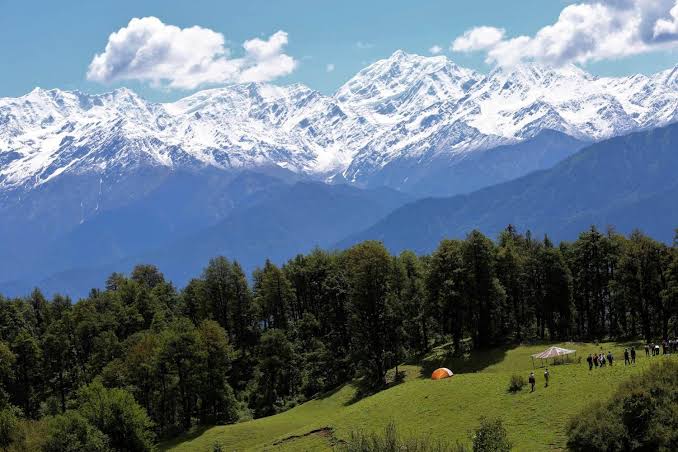
Located in Uttarkashi district of Uttarakhand at an altitude of approximately 12,500 ft (3,810 m), Kedarkantha transforms into a magical snow paradise every winter. Thousands of trekkers visit every year to experience fresh snowfall, white pine forests, and panoramic Himalayan views.
But one question every trekker asks is:
When is the best time to visit Kedarkantha for snow?
In this complete guide, we’ll explain the best months, weather conditions, snowfall chances, temperatures, trekking difficulty, and expert tips so you can plan the perfect winter trek.
Quick Answer
If you’re dreaming of trekking through snow-covered forests, camping beside frozen lakes, and witnessing breathtaking Himalayan sunrises, the Kedarkantha Trek is one of India’s finest winter adventures.
Located in Uttarkashi district of Uttarakhand at an altitude of approximately 12,500 ft (3,810 m), Kedarkantha transforms into a magical snow paradise every winter. Thousands of trekkers visit every year to experience fresh snowfall, white pine forests, and panoramic Himalayan views.
But one question every trekker asks is:
When is the best time to visit Kedarkantha for snow?
In this complete guide, we’ll explain the best months, weather conditions, snowfall chances, temperatures, trekking difficulty, and expert tips so you can plan the perfect winter trek.
Why Kedarkantha is India's Most Popular Snow Trek
Unlike many Himalayan treks that become inaccessible during winter, Kedarkantha remains one of the few beginner-friendly treks where you can safely experience heavy snowfall.
The trek offers:
- Dense Pine Forests
- Snow-covered Oak Trees
- Frozen Juda Ka Talab
- Beautiful Campsites
- 360° Himalayan Summit Views
- Sunrise Above the Clouds
This combination makes Kedarkantha one of the most photogenic winter treks in India.
Month-wise Guide to Snow in Kedarkantha
December – Fresh Snowfall Begins
Snow Condition: ⭐⭐⭐⭐☆
December marks the beginning of winter.
During early December, snow starts appearing on higher sections, while by mid and late December the trail usually turns completely white.
Highlights
- Fresh snowfall
- White forests
- Christmas & New Year atmosphere
- Frozen campsites
- Excellent photography
Temperature
Day:
0°C to 8°C
Night:
-8°C to -12°C
Ideal for:
People who want fresh snow with relatively manageable weather.
January – Best Month for Heavy Snow
Snow Condition: ⭐⭐⭐⭐⭐
January is widely considered the best month for the ultimate snow experience.
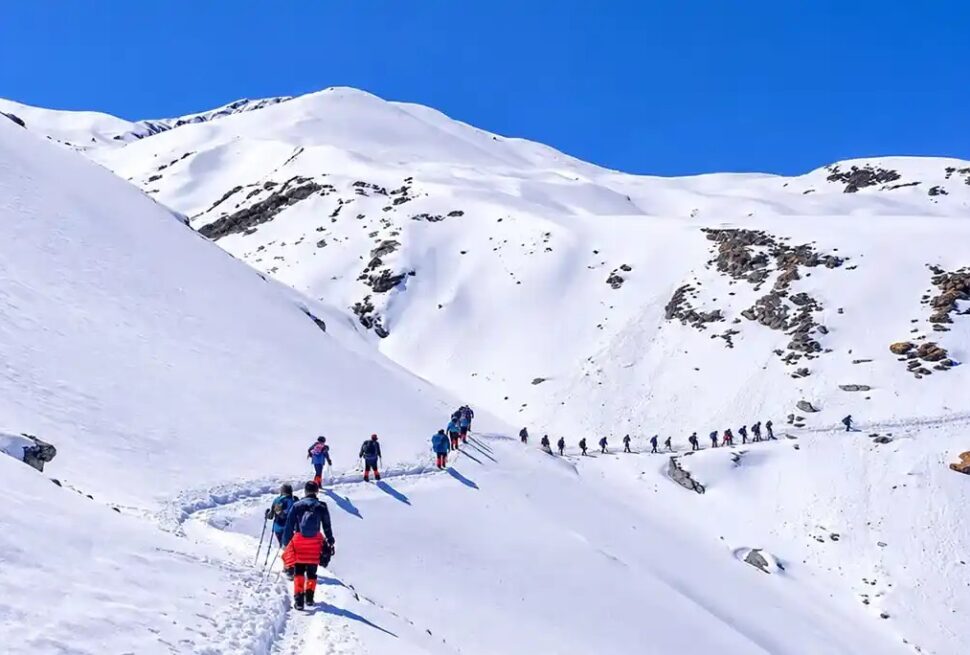
The entire trail—from Sankri to the summit—is usually covered with thick snow, making it a true winter wonderland.
Expect:
- Deep snow
- White pine forests
- Frozen lakes
- Stunning sunrise
- Crystal-clear mountain views
Temperature
Day:
-2°C to 5°C
Night:
-10°C to -15°C
Perfect For
- Snow lovers
- Adventure seekers
- Photography enthusiasts
- First-time winter trekkers (with proper gear)
February – Snow Continues
Snow Condition: ⭐⭐⭐⭐⭐
February still offers excellent snow conditions.
The weather becomes slightly more comfortable during the daytime while snow remains abundant across most of the trail.
Advantages
- Fewer crowds
- Thick snow
- Better summit visibility
- Longer daylight
Temperature
Day:
0°C to 6°C
Night:
-8°C to -12°C
Ideal for anyone seeking a quieter yet equally beautiful winter trek.
March – Snow Meets Spring
Snow Condition: ⭐⭐⭐⭐☆
March offers a unique blend of winter and spring.
Lower trails begin to clear, while the upper sections and summit often remain snow-covered.
You’ll experience:
- Snow near the summit
- Pleasant daytime temperatures
- Easier trekking
- Blooming forests
Temperature
Day:
5°C to 10°C
Night:
-5°C to -8°C
This is a great option for beginners who want snow without the harshest winter conditions.
Month-wise Guide to Snow in Kedarkantha
April to June
The snow melts significantly, giving way to green meadows, blooming rhododendrons, and pleasant weather.
Great for nature lovers but not for snow.
July to September
Monsoon season brings:
- Rain
- Slippery trails
- Poor visibility
- Landslide risk
Most trekkers avoid this period.
October & November
Autumn offers:
- Crystal-clear skies
- Golden forests
- Comfortable trekking
However, snowfall is generally absent until late November.
Snowfall Chances by Month
| Month | Snowfall Chances |
|---|---|
| November | Very Low |
| Early December | Moderate |
| Late December | Excellent |
| January | Outstanding |
| February | Outstanding |
| March | Very Good |
| April | Low |
What Makes the Snow Trek So Special?
During winter, Kedarkantha transforms into an entirely different landscape.
You’ll walk through:
- Snow-covered pine forests
- White mountain ridges
- Frozen Juda Ka Talab
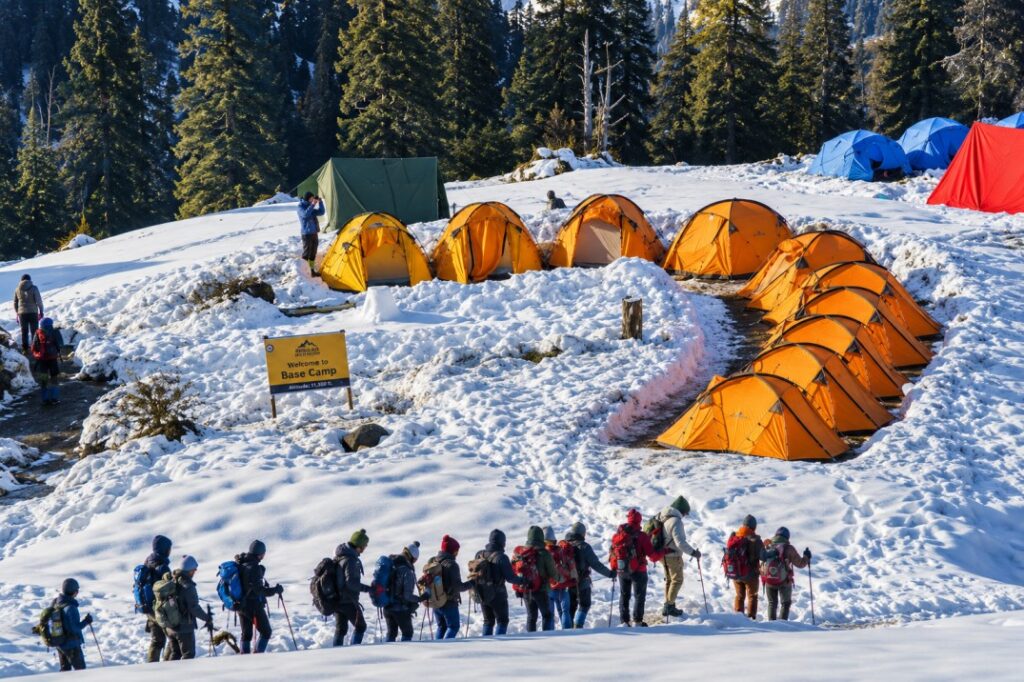
- Snowy campsites
- Spectacular Himalayan viewpoints
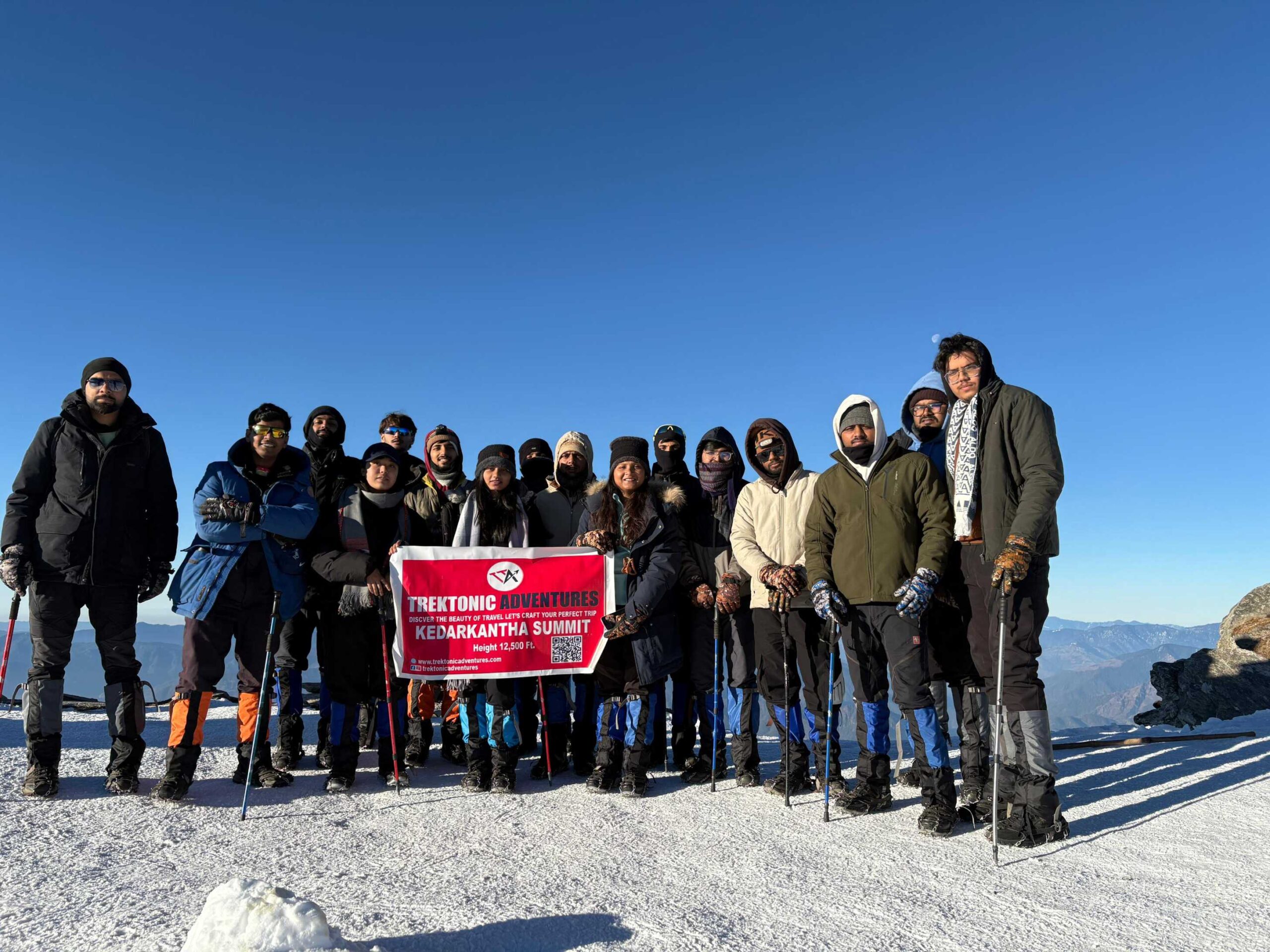
On summit day, trekkers often start before sunrise with headlamps, reaching the top just as the first rays illuminate iconic Himalayan peaks like Swargarohini, Bandarpoonch, Black Peak (Kalanag), and the Gangotri range.
What to Pack for a Snow Trek
Essential winter gear includes:
- Waterproof trekking shoes
- Woollen socks
- Thermal innerwear
- Down jacket
- Fleece layers
- Waterproof gloves
- Woollen cap
- Sunglasses
- Sunscreen SPF 50+
- Trekking poles
- Headlamp
- Insulated water bottle
Layering properly is the key to staying warm and comfortable throughout the trek.
Who Should Do the Kedarkantha Snow Trek?
The trek is ideal for:
- First-time trekkers
- Solo travellers
- Couples
- Families with older children
- Photography enthusiasts
- Adventure seekers
- College groups
- Weekend travellers
With good fitness and the right equipment, most healthy beginners can complete the trek comfortably.
Tips for the Best Snow Experience
- Book your trek well in advance for December–January departures.
- Choose experienced trek leaders familiar with winter conditions.
- Carry proper winter clothing and waterproof footwear.
- Stay hydrated even in cold weather.
- Walk steadily on snowy sections and follow your guide’s instructions.
- Keep an extra day in your itinerary during peak winter in case of weather-related delays.
Book Your Kedarkantha Winter Adventure
If you’re planning a snow trek in Uttarakhand, explore these Trektonic Adventures packages:
👉 Kedarkantha Trek
https://trektonicadventures.com/trip/kedarkantha-trek/
Perfect for trekkers looking for an unforgettable Himalayan adventure with scenic campsites, beautiful forests, and breathtaking summit views.
👉 Kedarkantha Winter Trek
https://trektonicadventures.com/trip/kedarkantha-winter-trek/
Designed especially for winter enthusiasts who want to experience fresh snowfall, frozen landscapes, and the magical charm of Kedarkantha in peak snow season.
Frequently Asked Questions (FAQs)
Which month has the most snow in Kedarkantha?
January generally offers the deepest and most reliable snow, followed closely by late December and February.
Is Kedarkantha suitable for beginners in winter?
Yes. Kedarkantha is considered one of India’s best beginner-friendly winter treks when undertaken with a reputable trekking operator and proper winter gear.
Can I experience snowfall in December?
Yes. Fresh snowfall usually begins in mid-December, with late December offering excellent snow-covered trails.
Is March still good for snow?
Yes. Snow often remains on higher sections and near the summit during March, making it a good choice for trekkers who want snow with milder weather.
What is the difficulty level of the Kedarkantha snow trek?
The trek is generally rated easy to moderate. Winter conditions can make certain sections more challenging, but it remains achievable for fit beginners with experienced guides.
Final Thoughts
The best time to visit Kedarkantha for snow is from late December to late February, when the trail is blanketed in pristine snow, the forests resemble a winter fairy tale, and the summit rewards you with unforgettable Himalayan panoramas. If you prefer slightly milder conditions while still enjoying snow, March is also an excellent option.
Whether you’re chasing your first snowfall or planning another Himalayan adventure, Kedarkantha promises a magical winter trekking experience that you’ll remember for years to come.